

NASCUT A
BARCELONA
Born here. Still here.

Sixteen years ago I visited Barcelona for the first time.
I still have this very specific flashback from the taxi ride from the bus station to my friends' apartment — the Castell de Montjuïc appearing above, palm trees lining the streets, buildings I had never seen anything like before. It felt slightly surreal, this mix of majestic architecture and proper Mediterranean landscape.
Oscar was a friend of the group. Born in Barcelona, the kind of person who knows a city not from a map but from years of living inside it. He showed us around the way locals do — not the obvious things, but the right things. His friends, his bars, his version of the city.
That trip I also discovered that in Spain, after Christmas dinner, the night is just beginning. Sixteen years later it still surprises me.
New Year's Eve in Barcelona was supposed to be the best part of the trip. I spent it sick, at home, while everyone else was out. At the time it felt like the worst possible outcome. Today it just makes me smile — sometimes what is supposed to be the best moment becomes something else entirely, and the city simply makes you wait.
Sixteen years later, Oscar and I met again in El Clot — one of those Barcelona neighbourhoods that has somehow managed to stay itself. Catalan, unhurried, beautiful without trying. We sat and talked about what the city has become, what has changed, and what, against all odds, has remained.
What follows is our conversation.

Oscar Vaello
— THE CITY —
We first met sixteen years ago — you showed me and my friends the city. What do you remember about Barcelona then, and what has changed the most since?
There's no doubt that Barcelona has changed a lot over the past 16 years, and I'm not sure it's for the better. The city has always been a tourist destination, like many port cities, it's always been very welcoming and open to the world.
But in recent years, we've seen tourism grow unchecked, with entire neighborhoods being swallowed up by the tourism industry and their residents forced out. Where lifelong residents once lived, or where locals used to go for a stroll, there are now only Airbnbs, hotels, hostels, nightclubs, fancy restaurants... where there used to be a fruit stand, there's now a souvenir shop; where there was a pharmacy, there's now a brunch spot; and where there was a neighborhood bar, there's now a cocktail bar with a menu in English.
Now, we Barcelona residents have to pay to go to Park Güell, visit the Cathedral, or the Hospital de Sant Pau, and you'll hardly ever find a Barcelona native strolling down La Rambla or on Barceloneta Beach. It's also become less safe. It's true that neighborhoods like the Raval were never very safe, but current crime levels are appalling.
— IDENTITY —
You were born here. Is there a moment when you truly understood what that means — being Barceloní?
I don't think there's a single “Eureka!” moment when you think, “Now I know what it means to be a Barcelonian!” but rather a gradual process. Ever since we were kids, we've oscillated between the pride of being from a city loved by everyone and the constant frustration of dealing with the problems that come with living in a city.
Anyway, if you want me to name a truly significant moment — perhaps the most important one for the city in the last 80 years — I'd say it was the 1992 Olympic Games. That was the year Barcelona stopped being a gray, industrial city with its back to the sea and became a global metropolis. The change was so profound that today it's studied in urban planning as the “Barcelona Model.”

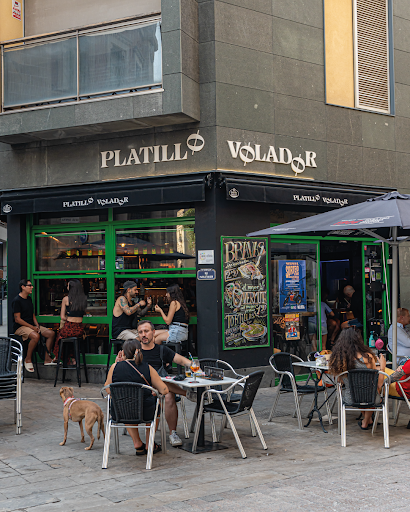
Platillo Volador · El Clot
— EL CLOT —
El Clot — where we met recently — feels very different from the Barcelona tourists see. What does that neighbourhood mean to you, and why do you think locals still protect it?
El Clot is the perfect example of a neighborhood that was always considered outlying — far from the city center and with a very local character.
Now, as is the case in much of Barcelona, local businesses are increasingly being squeezed out by the influx of newcomers. We locals feel that Barcelona has become too trendy, and rather than protecting it, we're giving up on it.
What does a typical Sunday look like for someone who actually lives here?
A Barcelonian might meet up with a friend on a Sunday for breakfast, a sandwich with “pa amb tomaquet” and a coffee on a sunny terrace. Then perhaps go for a workout or take a walk with the family. Before lunch, they'll have a vermouth and an aperitif. Then they'll have paella with the family and maybe take a nap. If they have lunch at home, it's a must to buy a cake from a bakery for dessert.
— GENTRIFICATION —
Barcelona has changed dramatically in sixteen years — tourism, rental prices, gentrification. As someone born here, what does it feel like to watch that happen to your city?
As someone born in Barcelona, I have mixed feelings about the gentrification process. On the one hand, I love that Barcelona is international; I like seeing expats everywhere, and I'm an enthusiastic advocate of multiculturalism.
But on the other hand, I'm concerned that this massive influx of foreigners will end up diluting our national identity. I'm afraid that Barcelona will end up like Dubai or Singapore, where glamour, modernity, and excessive internationalism have practically wiped out tradition, uniqueness, identity, and distinct character, turning them into soulless cities.
Or like Venetia, where mass tourism has almost eliminated the local population. It is projected that by 2050, only 15% of Catalonia's inhabitants will be Catalan speakers; in other words, in two or three generations, a language will have been lost, and with it, a nation, a thousand-year-old history, a tradition, an identity…
I'm afraid that Barcelona will end up like Dubai or Singapore, where glamour, modernity, and excessive internationalism have practically wiped out tradition, uniqueness, identity, and distinct character, turning them into soulless cities.
— Oscar Vaello
— HOUSING —
The rental situation is one of the most discussed topics right now. How has it affected people you know?
The current housing situation in Barcelona is critical. In fact, it is critical in every city around the world.
We are witnessing a global trend of large populations moving from rural areas to cities, which is why every city in the world, absolutely every one, faces a housing affordability crisis. Barcelona is no exception.
But in Barcelona's case, there's an added complication: our beloved and highly intelligent politicians, as usual, have made the problem worse instead of fixing it.
They've banned rent increases, and in many cases have mandated reductions well below market rates. The result is exactly what virtually all economists predicted: whenever the price of a product is capped, that product disappears from the market.
Politicians say proudly that they've managed to lower the average rent, and that's true, but what they don't mention is that there are now no rental apartments left.
In more than half of Barcelona's neighborhoods, there are fewer than 10 apartments for rent, and we're talking about neighborhoods with tens of thousands of residents. In other regions of Spain where price caps haven't been applied, rents have continued to rise, but at least there are rents.
In Barcelona, even if you have money, you can't get a place to live. I have several real estate agencies as clients at my law firm in Barcelona, and they tell me that if they post an ad for a rental apartment at the price set by law, within a few hours, they receive several thousand applications. There is genuine desperation, and those who are supposed to solve the problem, make it worse.

Ens foten fora de casa · El Raval
You describe the rent cap policy as making the problem worse — which many economists agree with. But what should politicians actually do instead? Are there models from other cities or countries that you think Barcelona should be looking at?
From my point of view, the current crisis is a supply crisis — there is a housing shortage. Therefore, any solution that doesn’t involve increasing the housing supply is simply a form of self-deception. In a normal year, Barcelona’s population increases by 50,000 inhabitants, which means a need for 20,000 new homes annually. Barely 1,500 are built.
The excuse given by leaders is that there is no space to build, and that’s true — Barcelona is a small, densely populated city with no room to grow. But the reason more isn’t built is due to the very bureaucracy imposed by politicians. If a developer owns land and wants to build public housing, it takes 7 years to obtain all the permits required to start construction. There is no lack of money either — the private sector is eager to build because they know demand is so high that everything built will be sold.
My recipe for fixing the situation:
→Increase building heights. Either we fit more people into the same space, or we start preventing non-residents from buying or renting. I don’t like that solution.
→Expand Barcelona and absorb the surrounding towns and cities, as has happened with all cities throughout history. Sant Adrià del Besòs, Badalona, L’Hospitalet, Santa Coloma de Gramenet — they must become neighbourhoods of Barcelona.
→Unlock land for construction. There is a lot of industrial land around Barcelona that must be relocated to make room for new housing.
→Reduce construction bureaucracy, so that if someone has the site and the money, they can start as soon as possible.
The phenomenon we are experiencing now has been seen before. In the 1960s, Barcelona suffered a massive wave of migration from southern Spain, and 1.5 million homes had to be built in just 10 years. Now it is our turn to do the same. We have examples of cities that have done it well: Vienna, Tokyo, Zurich — cities that have achieved a balance between public housing and private initiative.
In a normal year, Barcelona’s population increases by 50,000 inhabitants. Barely 1,500 homes are built.
— Oscar Vaello
— THE OTHER BARCELONA —
Is there a Barcelona that tourists never find — a place, a ritual, a feeling — that you'd be willing to share?
There are still wonderful places in Barcelona and its surroundings that haven't yet been saturated by tourists, such as the three chimneys of Sant Adrià del Besòs, a magical spot for fans of Brutalism. The Besòs River is both a recreational area and an open-air graffiti museum. The Carretera de les Aigües offers a beautiful walk with priceless views of the city. The Llobregat River and the Badalona waterfront promenade are the perfect plans for a sunny day… but I don't want to say it too loud yet, because we run the risk of it ceasing to be a secret and losing its charm, just as happened with the Carmel Bunkers. What was once a hidden gem for locals and a site of great historical value became a viral sensation on social media.
This led to hundreds of people gathering there every evening to watch the sunset, often accompanied by alcohol, loudspeakers blasting music, raves that lasted until dawn, drunk tourists urinating everywhere, fights, and trash… Local residents watched as their lifelong neighborhood deteriorated, so they organized protests. Eventually, the council restricted the access.
Now it's no longer possible to watch the sunset or see the city at night. Another place that we, the citizens of Barcelona, have lost because of tourism, just like Park Güell, La Rambla, Barceloneta Beach, the Gothic Quarter… and so on.
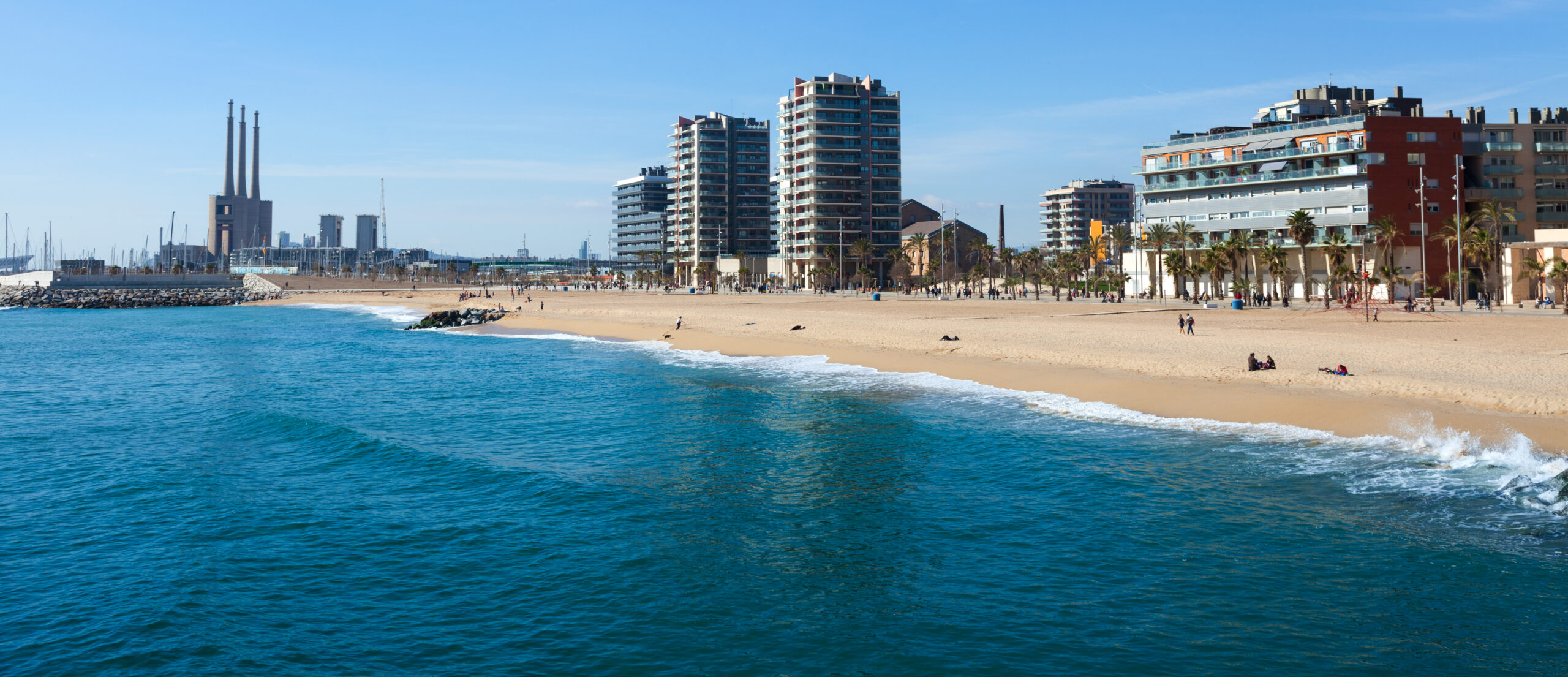
Sant Adrià del Besòs
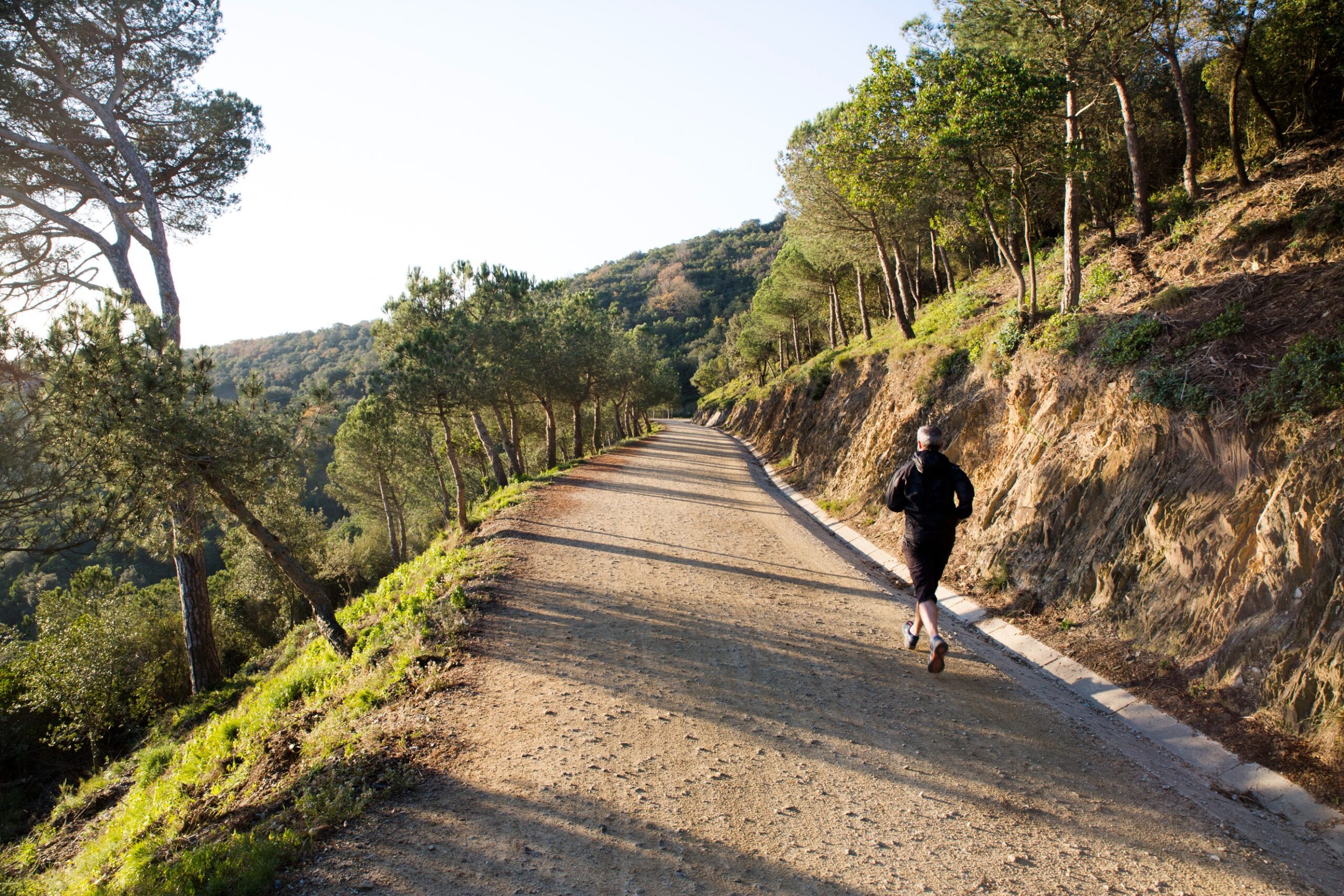
Carretera de les Aigües
— CHARACTER —
If you had to describe the Catalan character to someone who doesn't understand it, what would you say?
The typical Catalan personality is somewhat bipolar. On the one hand, we are reserved and distrustful, and we are very protective of our privacy.
We tend to set boundaries in our friendships; we don't like others invading our personal space, and at the same time, we don't want to invade theirs.
I have friends of over 30 years whose parents I've never met, and this is quite normal in Catalonia. We are discreet when it comes to our money. Unlike the aristocracy by birth (more inclined toward luxury and pomp), wealth in Catalonia emerged from the Industrial Revolution. The wealth of the 19th century was rooted in a culture of effort, sacrifice, and hard work. Showing off money was considered disrespectful to the very source of that wealth: the factory and the workers.
That said, it is also true that traditional Catalans have always been very open to the world and have always been fascinated by the advancements of their time. Barcelona has historically been Spain's “gateway to Europe.” Its status as a Mediterranean port and its proximity to France made it the perfect entrance for ideas and machines coming from the north, such as the railroad, the steam engine, electricity, street lighting, the hot-air balloon, aviation, photography, cinema… but also political and cultural advancements like trade unionism, anarchism, and modern urban planning.
— WHY STAY —
What makes you stay?
Like all cities, Barcelona comes at a price, in the form of pollution, noise, high costs, insecurity, stress, and a lack of nature, but I think the overall quality of life is good.
If you look at the economy, climate, cost of living, cuisine, public transportation, crime, leisure, cultural offerings, freedom, beauty, connections by flight, landscapes… it isn't number one in any single category, but it scores well in all.
Something in his answers about tourism made me think about my own experience with cities that are not mine. I saw it happen in Kraków, Lisbon and then in Budapest — and Budapest in particular breaks my heart. Watching beautiful old coffee houses disappear to make room for another Starbucks, seeing local bars converted into cheap beer spots for tourists, not to mention the Airbnbs, the drunk tourists in central locations, and the unstoppable rent increases. It is a very familiar story.
I asked him one last question.
I was also an expat in Budapest — I was not born there, yet I owned a flat and lived there for many years, and I genuinely felt like a local. So your answer made me think, because you mention loving that Barcelona is international and being an enthusiastic advocate of multiculturalism — and yet you also worry about what mass tourism and the influx of newcomers is doing to Catalan identity. Where do you draw the line between the two?
I would draw a very clear line between the expat and the tourist. The expat tries to integrate, live peacefully, and even contribute to the community. The tourist just comes to enjoy himself. Of course we can make subdivisions — not all expats and not all tourists are the same — but the distinction is fair and important.
It is a distinction worth sitting with, especially in a city that is still figuring out who it belongs to.
Oscar Vaello runs VaelloLegal, a Barcelona law firm specialising in real estate and inheritance, primarily serving expats. If you are buying, selling, renting or navigating inheritance matters in Spain, you can reach him at oscar@vaellolegal.com
VAELLO LEGAL
BARCELONA