
La Bella
Easo
Old money, sea air, art in Gros and a mural alley with a bar at the end.
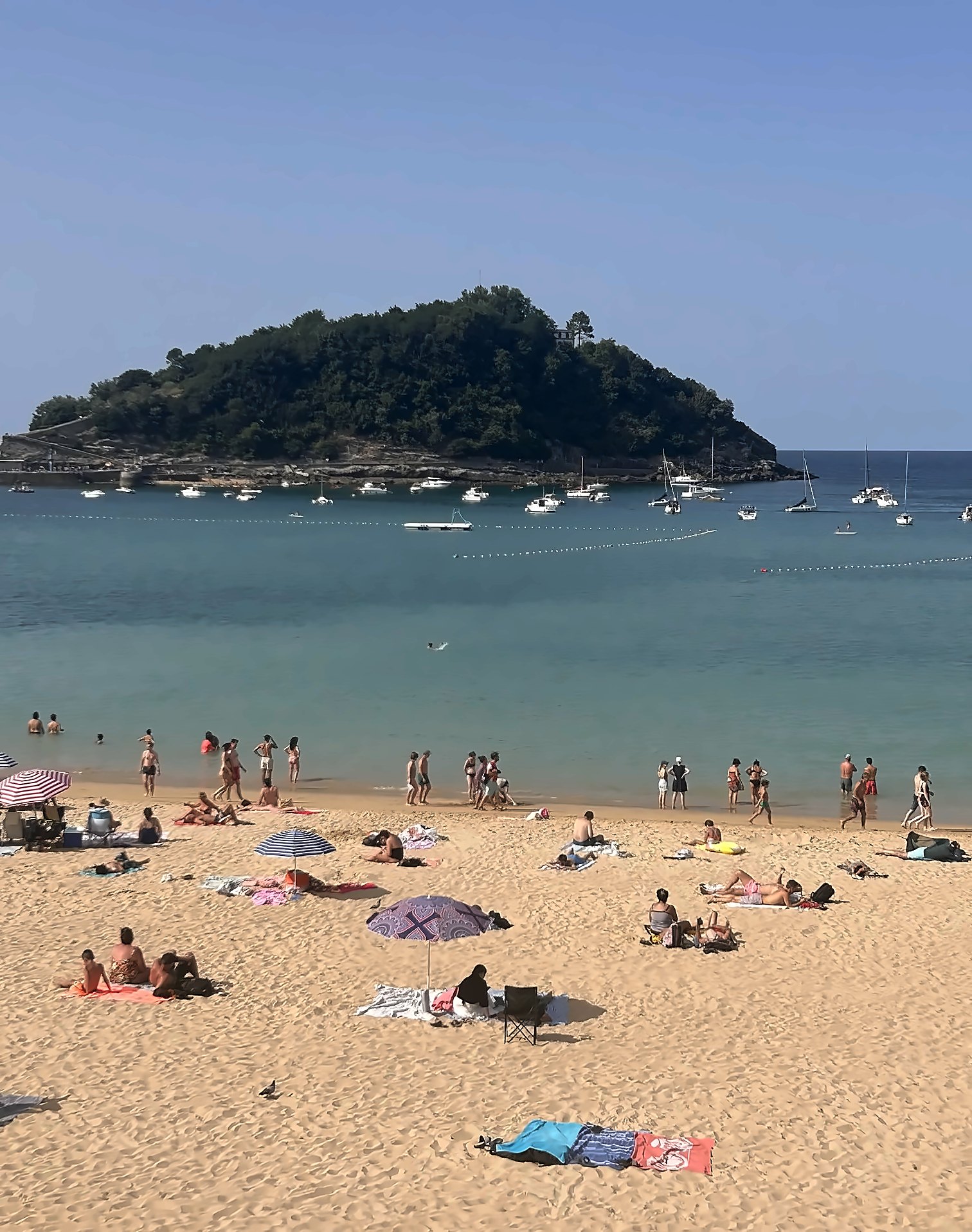
San Sebastián was where my trip began. I walked out to the bay on the first morning and had one clear thought: I can smell money on the street here. Madrid is pijo compared to Barcelona. San Sebastián is another level.
The bay
Postcard, with towels.
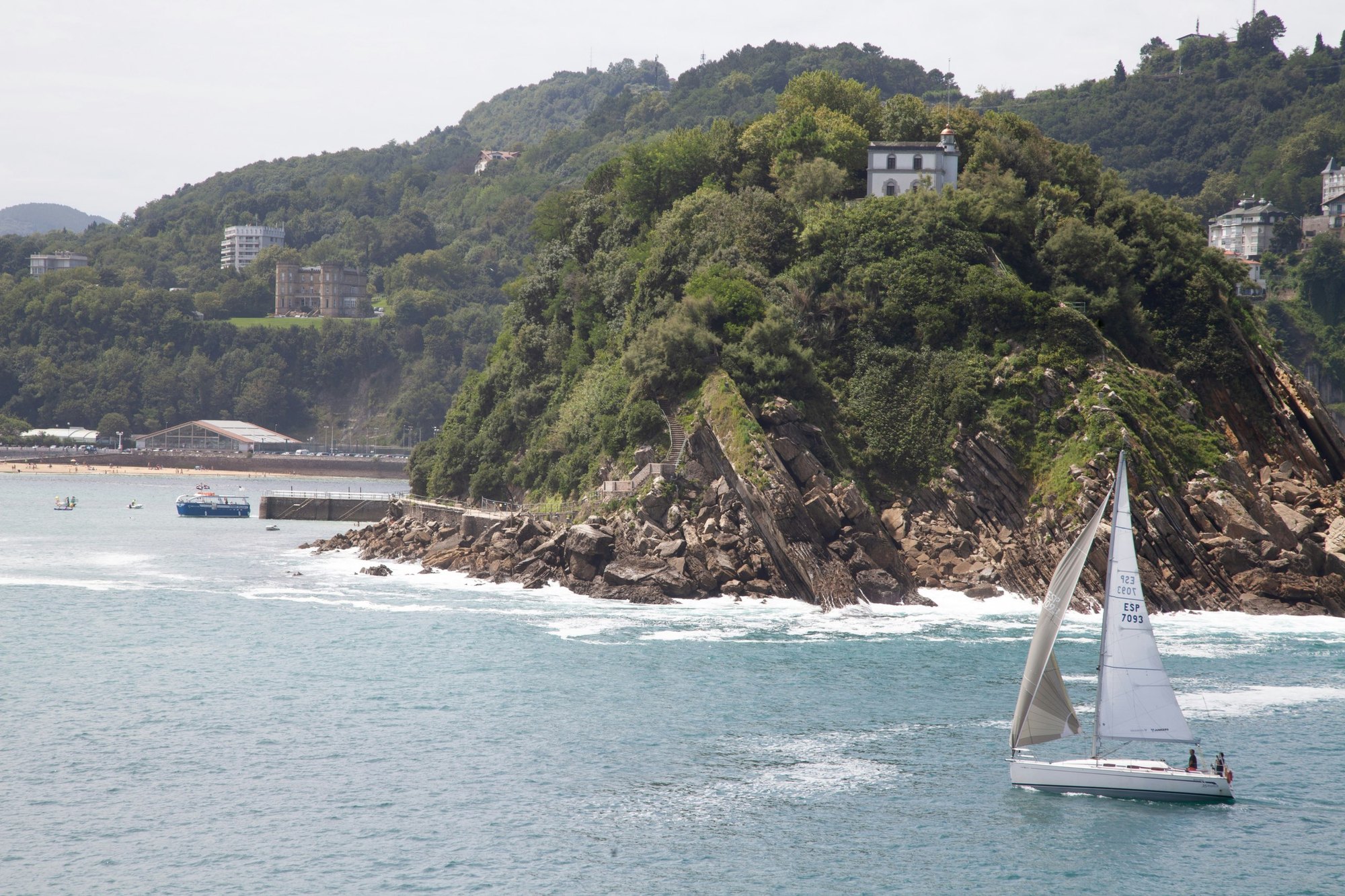
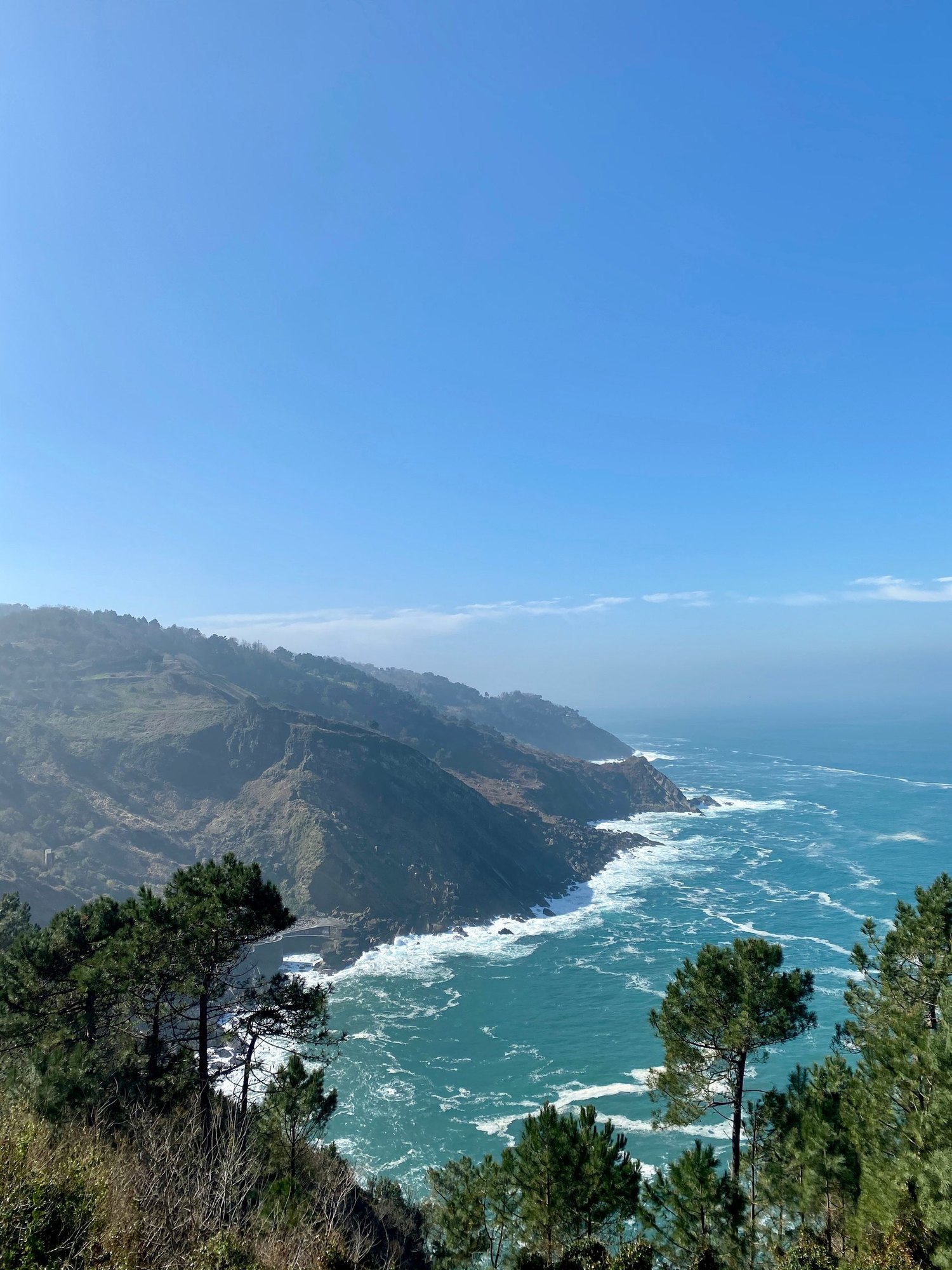

Start at La Concha. A wide curve of golden sand, a small green island sitting in the middle of the bay, sailboats and yachts anchored between them, and a row of grand white hotels and apartment blocks watching over it all. It looks like a postcard, because it is one.
In August it is full. Every second language I heard was French, then English. Even so, the city keeps its composure. The setting is too elegant to be ruined by a few thousand towels.
I can smell money on the street here.
Belle Époque
The little Paris of the north.
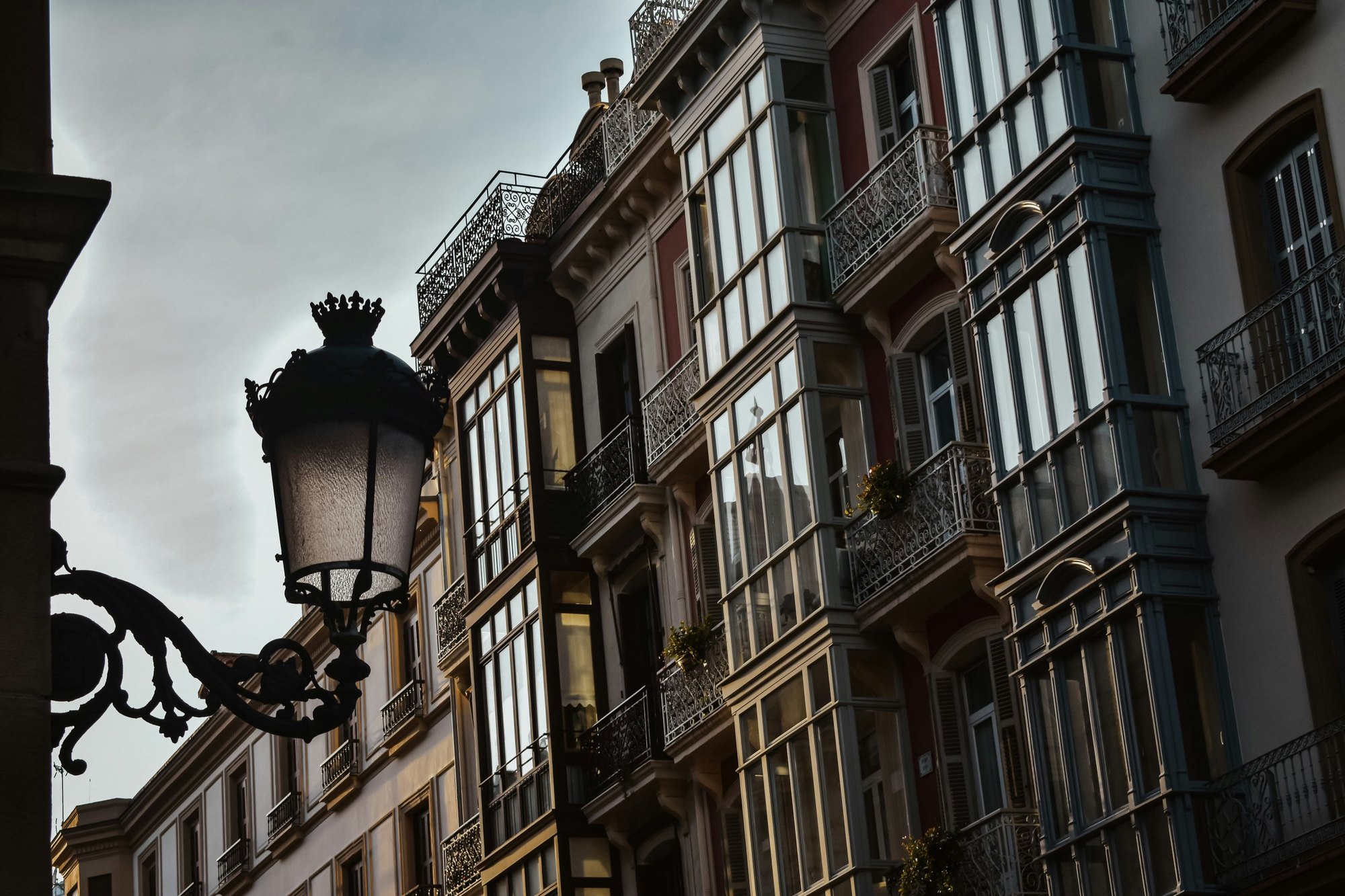
The architecture explains the mood. In the 1860s the city walls came down and a new city was planned outside them. Queen Isabel II had already made sea bathing here fashionable, and from 1887 the queen regent María Cristina spent her summers here, so the court and the aristocracy followed. They built in the French style: stone façades, iron balconies and mansard roofs, next to the white glass galleries typical of this rainy coast. Even the casino, opened in 1887, was a palace. Today it is the town hall. People started calling it the little Paris.
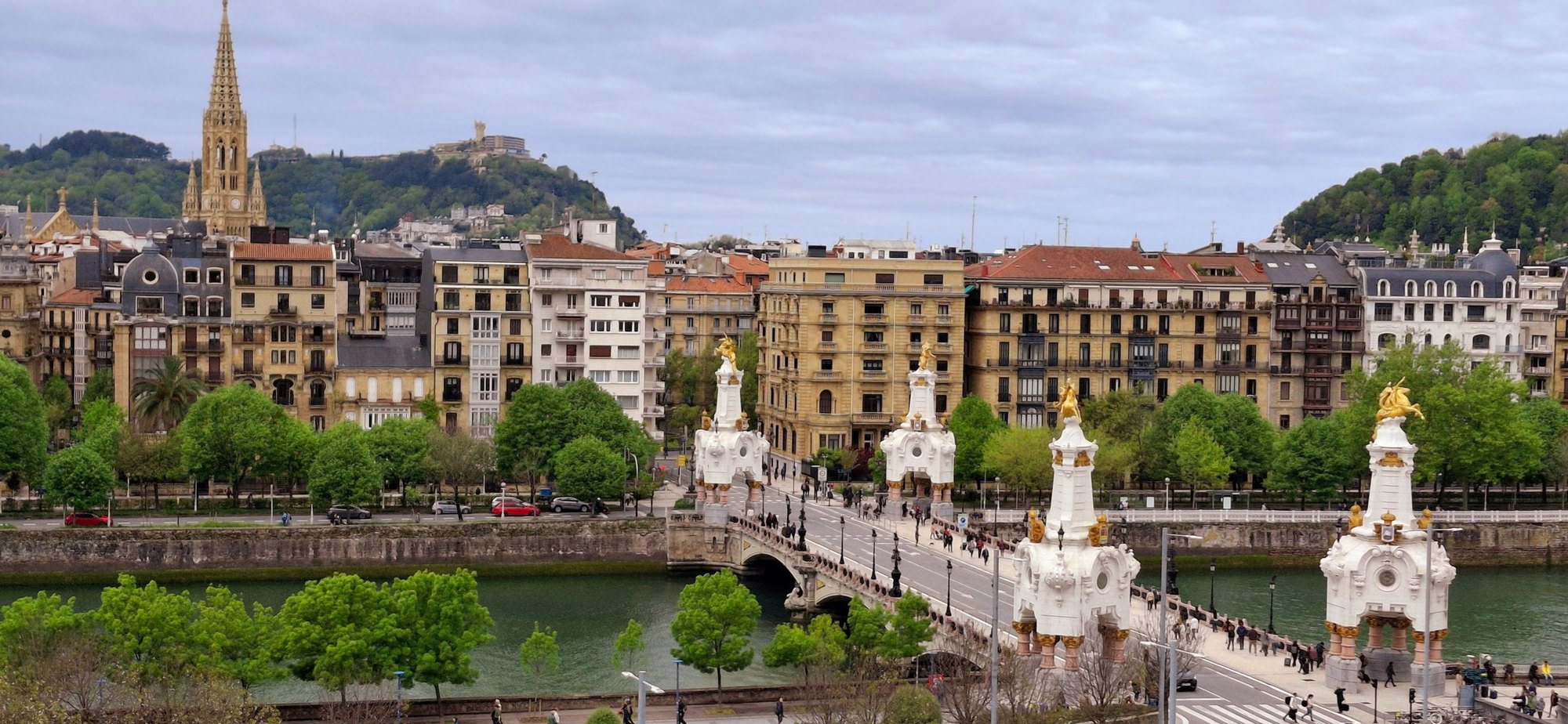
Walk the centre and you see it on every corner. Posh, distinguished, very well kept. And between the buildings, small concept stores with a serious selection of clothes and design, and art galleries everywhere.
Art in Gros
A gallery, a print shop and a textile corner.
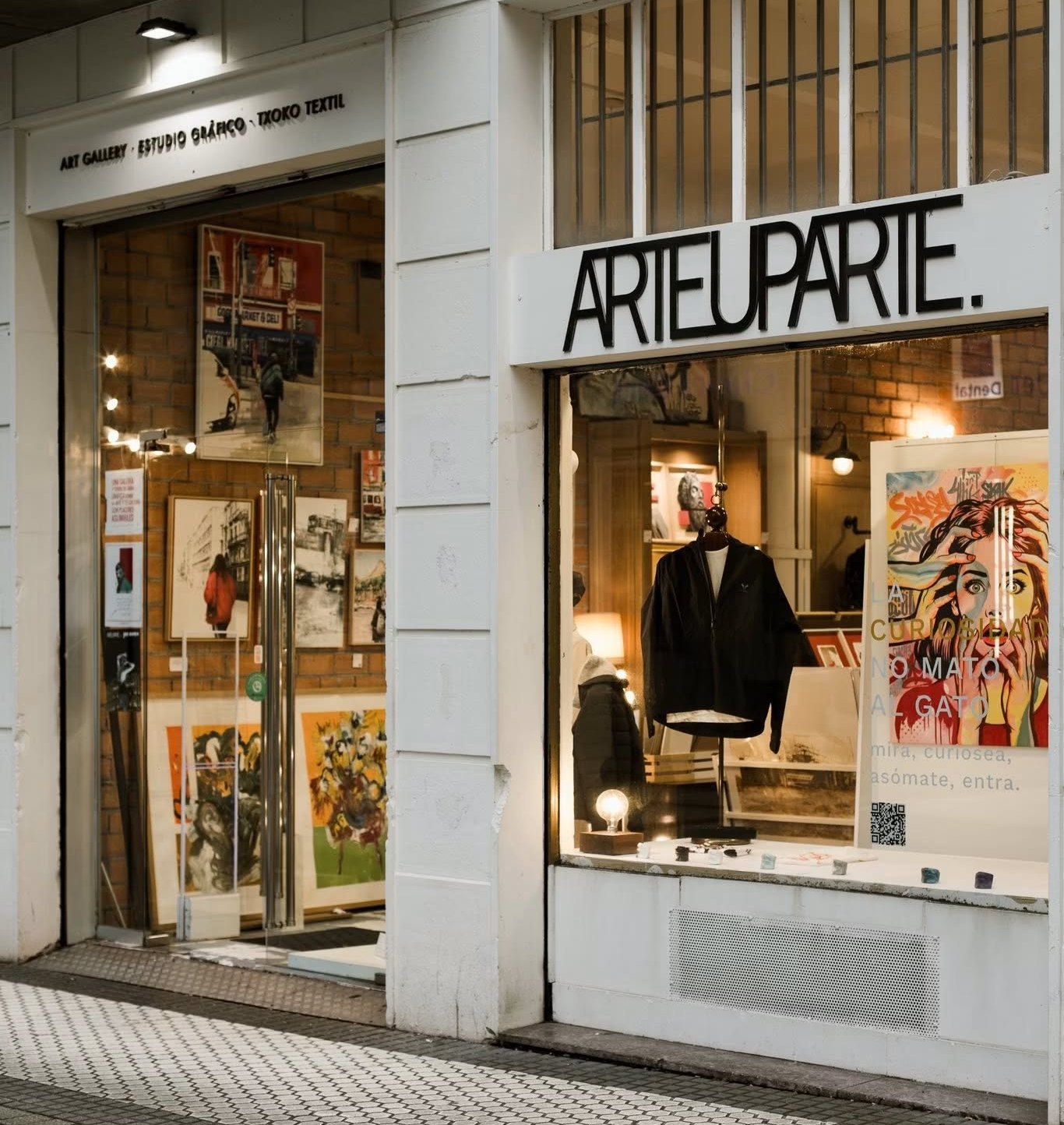
The galleries surprised me more than the shops. In Gros, the surf neighbourhood on the other side of the river, I found Arteuparte: a gallery, a graphic art shop and a small textile corner in one, with local and international artists side by side and T-shirts printed with their work. People here clearly understand art, and the city has a long list of galleries to prove it.
People here understand art.
The alley
The other San Sebastián.
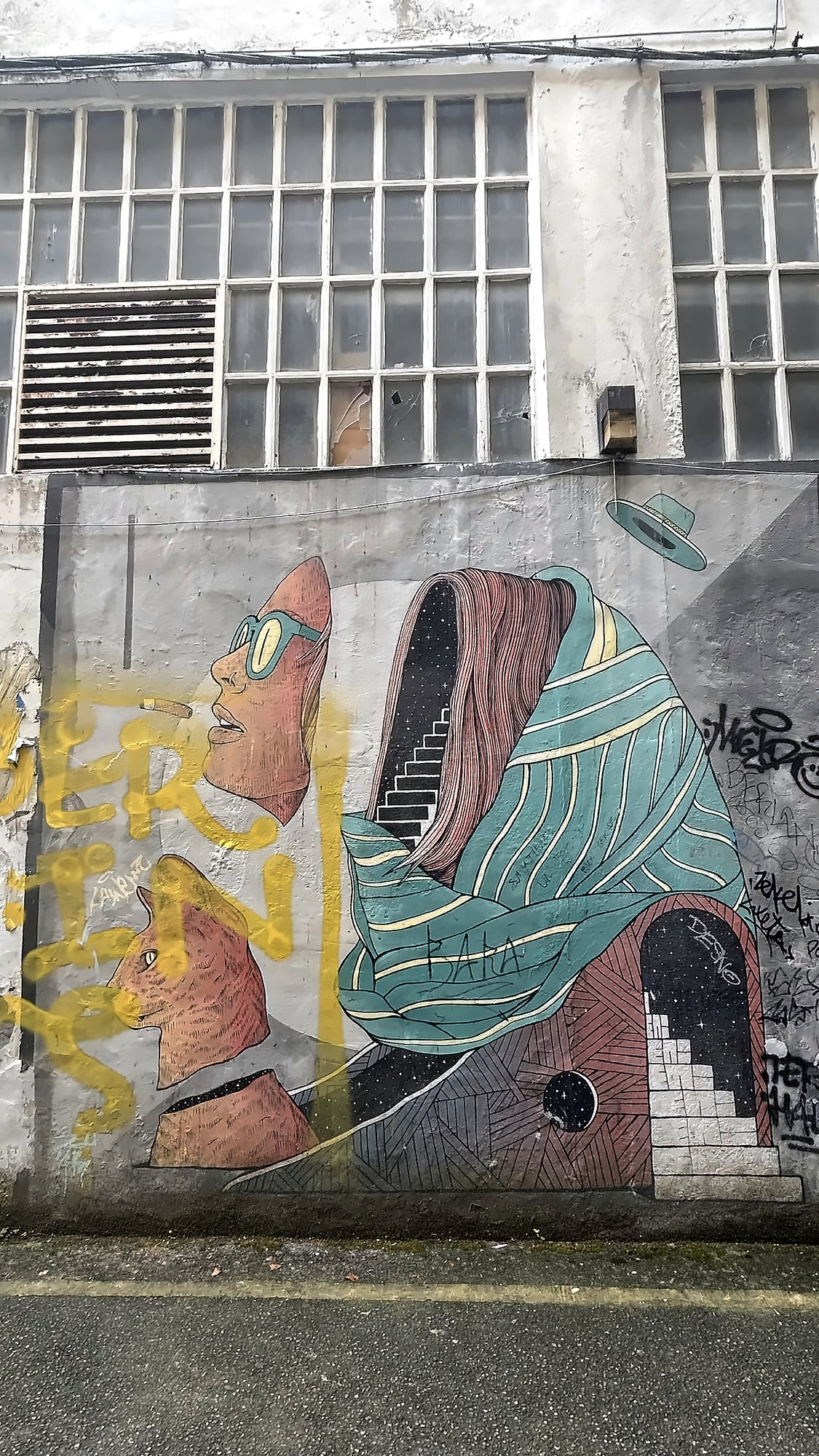
Then there is the other San Sebastián. Egia, next to Gros, is sometimes called the Soho of the city. Close to the park, the streets turn darker and more industrial, all garages and back walls, and then you find a narrow passage covered in murals.
This is real street art, by people who know how to paint. Faces, cats, geometric shapes, a woman wrapped in a striped scarf with a staircase inside her hair. At the end of the alley there is a neon sign and a pink tunnel: Dabadaba, a bar and music venue so hidden you would never find it by accident. Unless you are me.
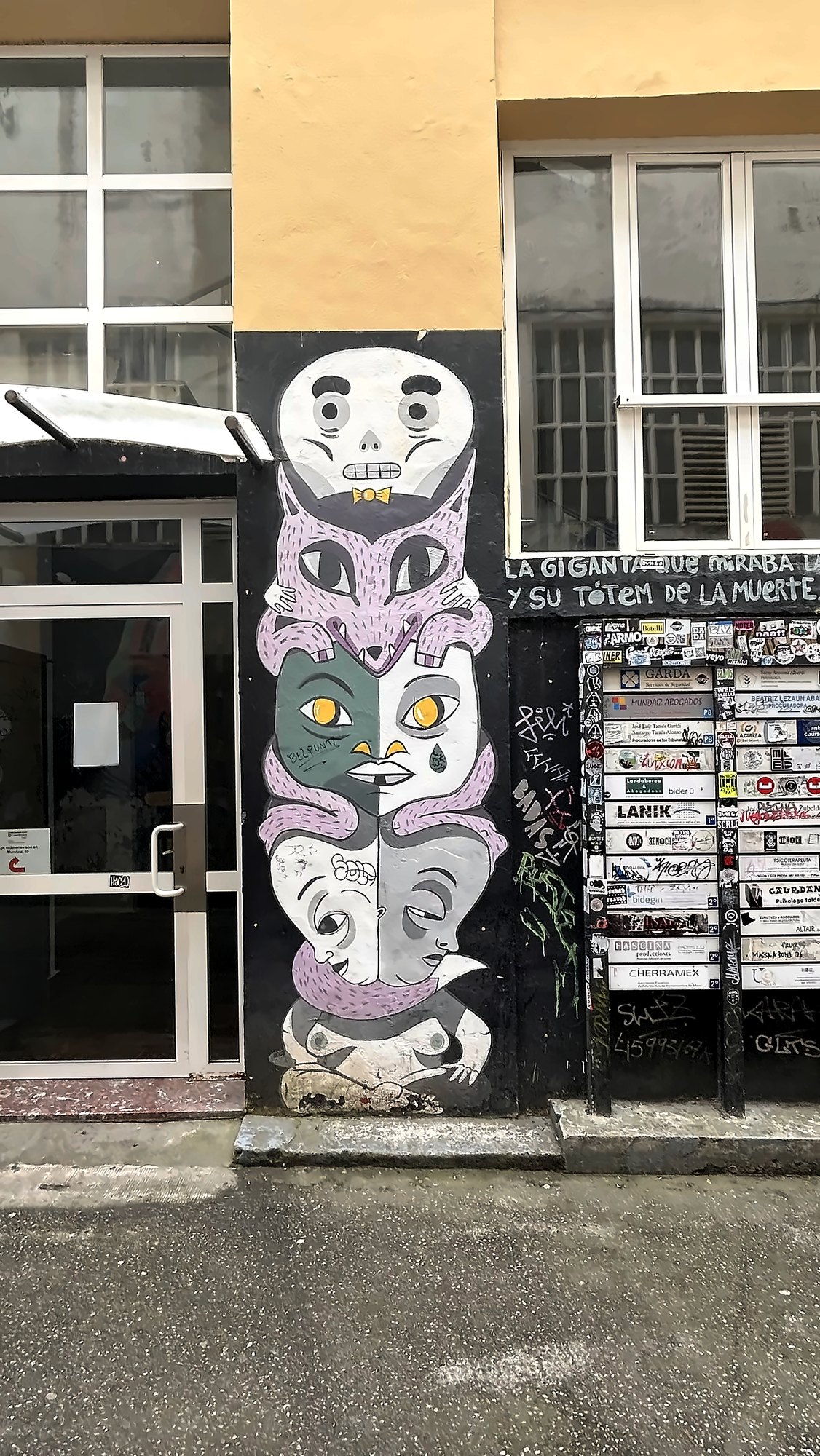
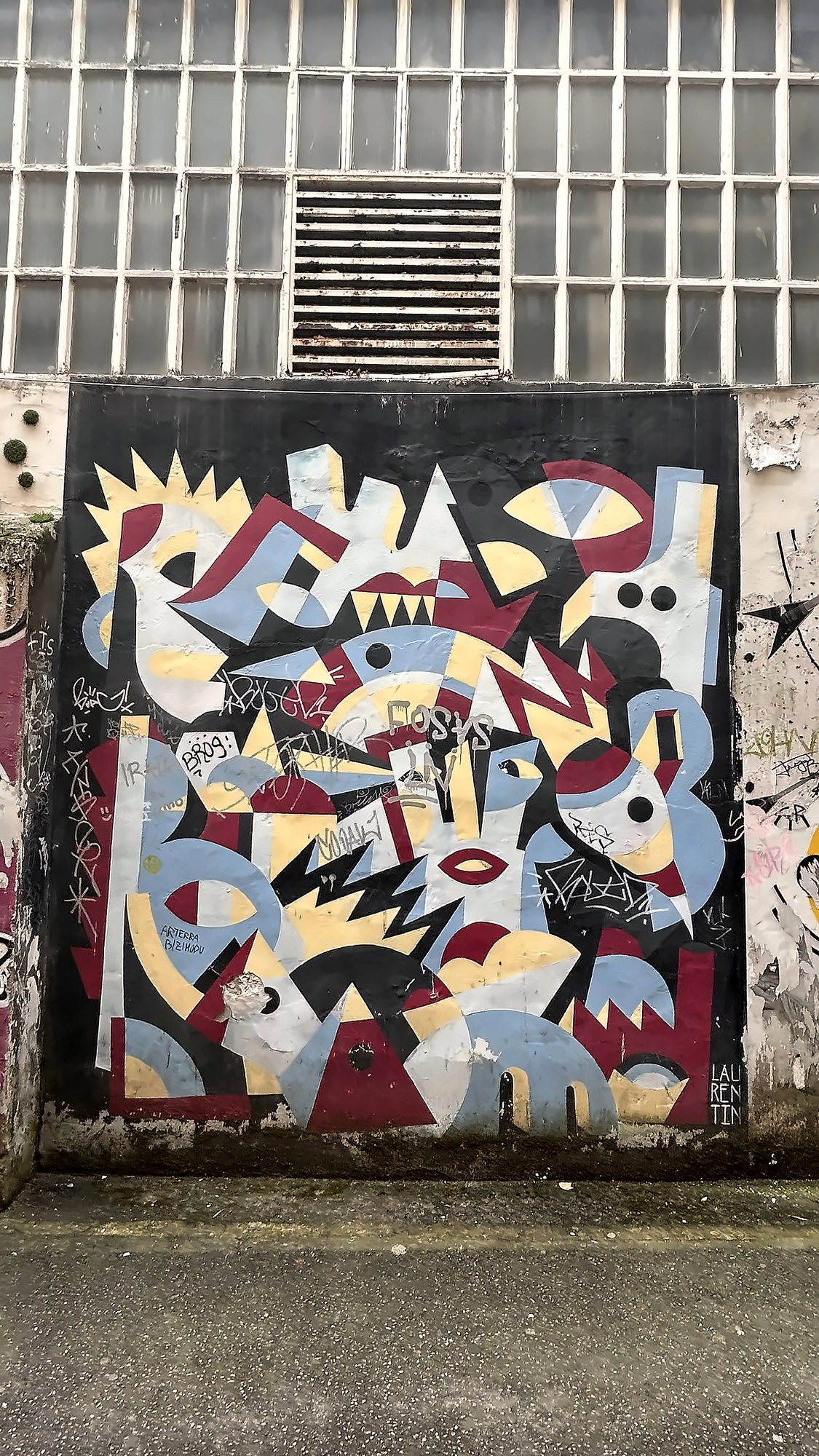
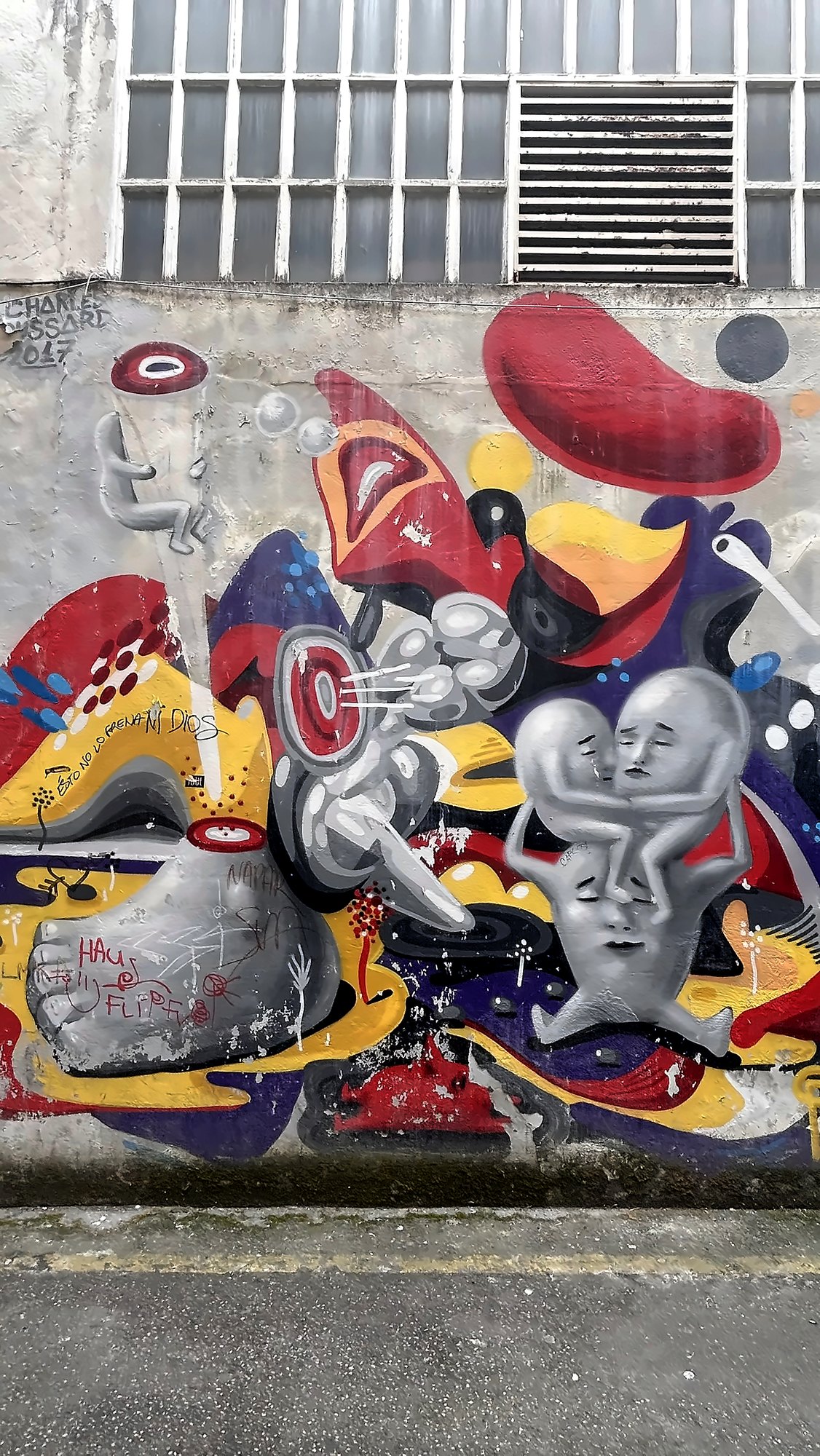
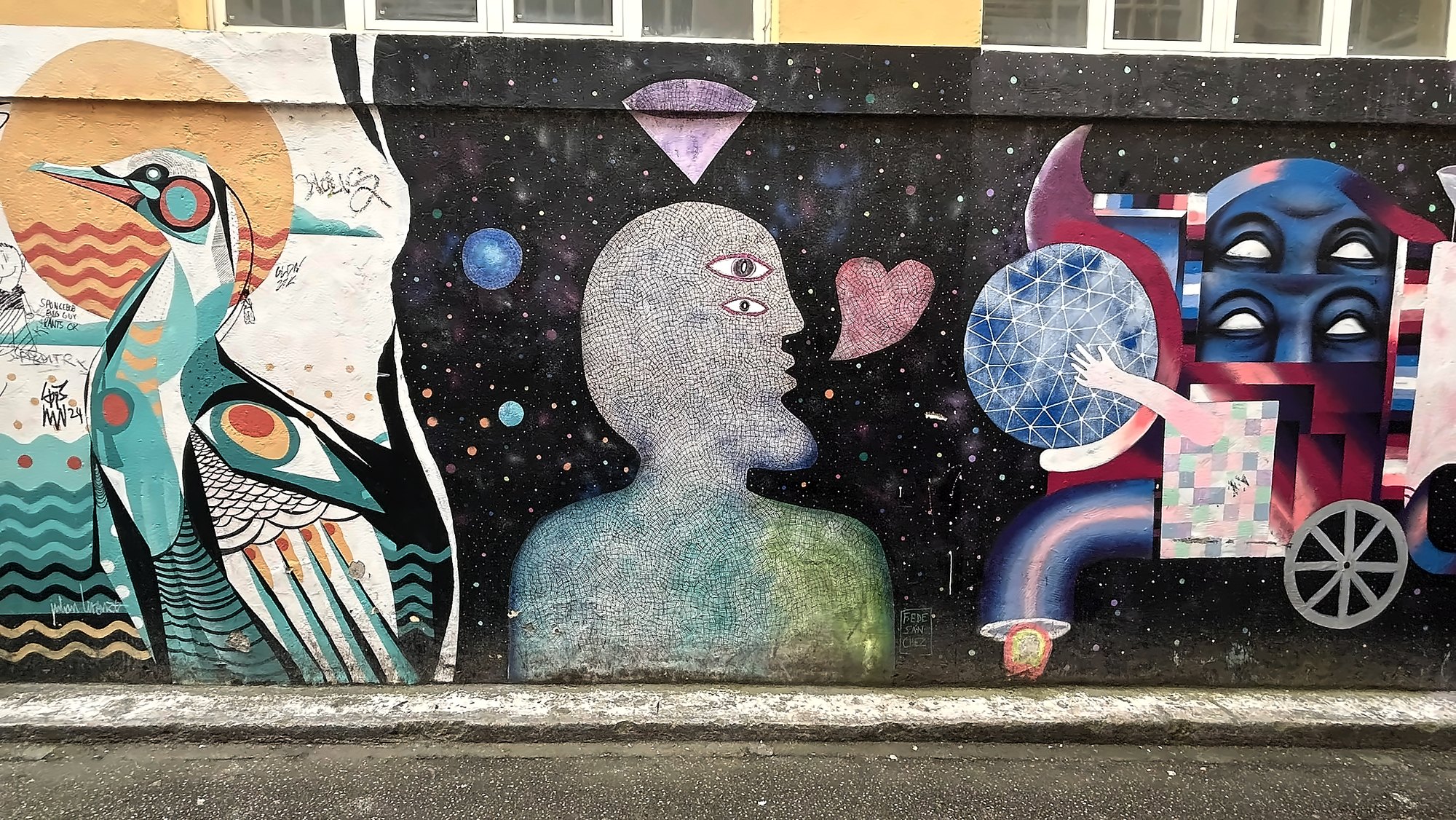
In a city this lavish, finding a corner like this felt like a secret. Madrid has Lavapiés. San Sebastián has this alley.
Madrid has Lavapiés. San Sebastián has this alley.
Surf and coffee
Scandinavian, a bit Mediterranean.
Surf culture is everywhere, even on the city's own beaches. The surf shops are some of the best I saw on the whole coast: good sportswear, washed-out colours, proper design. A bit Scandinavian, a bit Mediterranean. Exactly my style. You can read more about them in Dress Like an Onion.
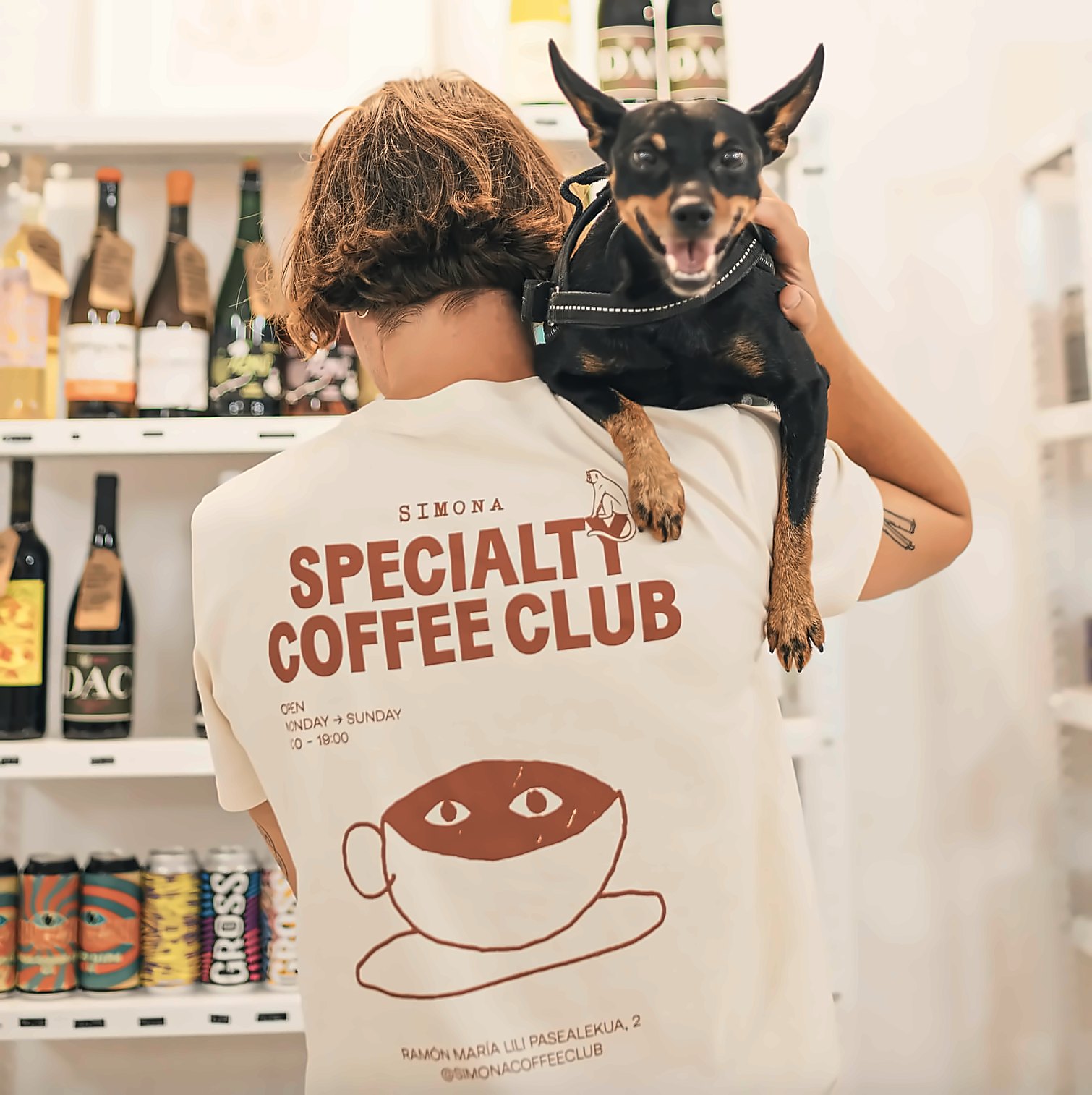
My coffee place was Simona Specialty Coffee Club in Gros, by the river and a short walk from the beach: natural wood, plants, shelves of coffee and design books, and a very good flat white. I am picky about my flat white, and I was happy. The only downside of the cafés this close to the beach is that in August they can feel like they belong more to the tourists than to the city.
No, gracias. Soy casi madrileña.
It was in San Sebastián that people kept switching to English with me, kindly, assuming I was struggling. Every time I switched back. No, gracias, soy casi madrileña. They laughed, and we carried on in Spanish.

The pijos
Old money, and the women who wear it well.
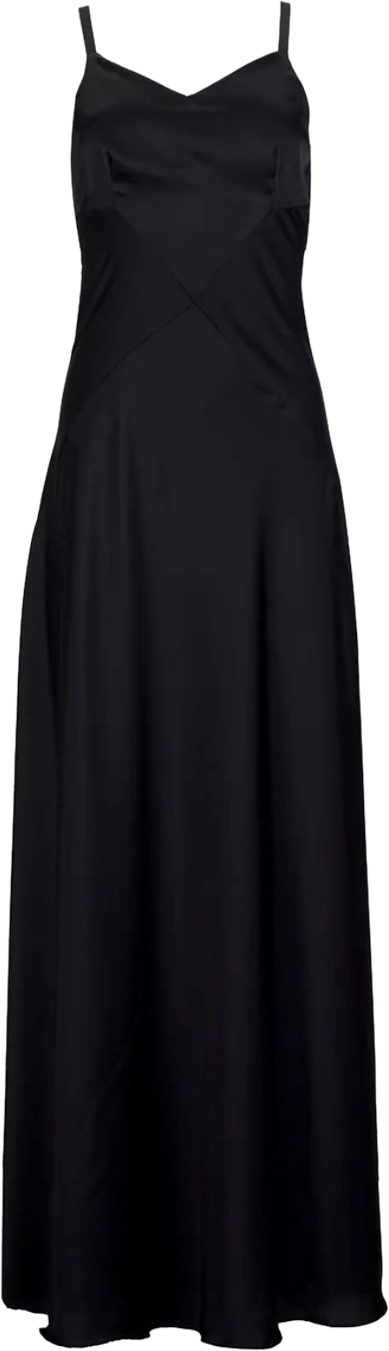
Go further into the centre and you meet the pijos, the old money. One girl stopped me in the street with her look: all in black, very elegant, pearls around her neck and a red flower in her dark hair. That was it. That was San Sebastián.
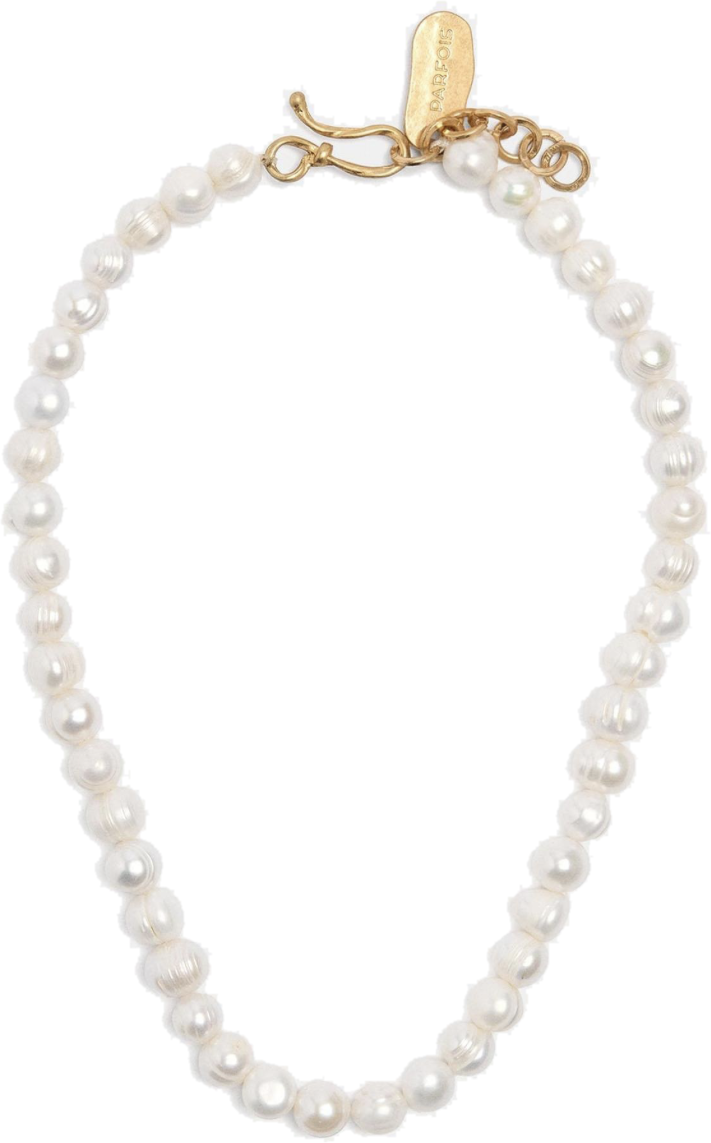
I know the pijo style can feel old school, and in Madrid I am sometimes tired of it. The boys all look the same. But the women are a different story. They keep something of Spanish tradition alive: aristocratic clothes, femininity without apology, and that hair. I grew up in a Slavic country, where every second girl is blonde, so for me the Spanish morena is the ideal. Penélope Cruz, Paz Vega.
For anyone who works with fashion, this is worth noticing. In a world of fast fashion, where everyone looks like a copy of everyone else, women who dress with this kind of tradition and care are something to appreciate. The clothes here look properly made: solid fabrics, good finishing, beautiful design. They say: I have money, and I know how to put myself together.
I have money, and I know how to put myself together.
Pintxos
Gorriti Taberna, since 1921.
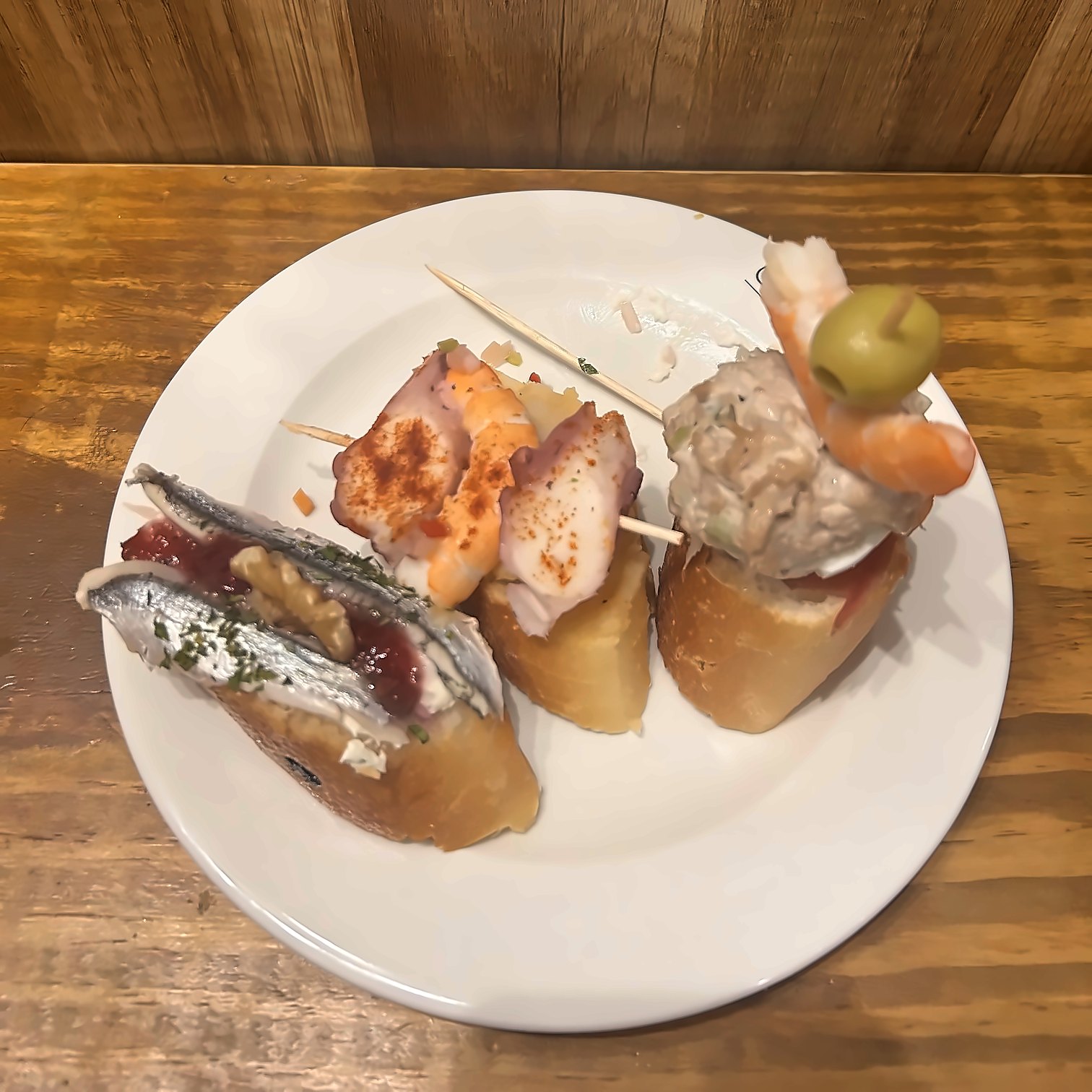
The food is the reason most people come, and it deserves the reputation. My favourite was Gorriti Taberna in the old town, a bar that has been open since 1921. Fresh, generous pintxos with a lot of seafood, exactly what I want to eat by the sea. Go at lunchtime, stand at the counter and keep pointing.

A city to come back to
The elegant centre was built from the late 19th century, when the walls came down in the 1860s and a local architect, Antonio Cortázar, drew the plan for a new city by the sea. Queens spent their summers here, and the city built itself a casino, grand hotels and promenades to welcome them. You can still feel that era on every corner.
San Sebastián is a city you have to visit. For the food, yes. But for me it was more than food: the architecture, the fashion, the galleries and one hidden alley full of murals.
Good to know
- La Concha & Ondarreta
The city beaches: calm water and Santa Clara island in the middle of the bay. - Zurriola, Gros
The surf beach and the surf neighbourhood, with galleries and surf shops. - Arteuparte Gallery
arteuparte.com, gallery, print shop and textile corner in Gros. - Egia & Dabadaba
The mural alley and its hidden bar and music venue, near Tabakalera. - Simona Specialty Coffee Club
@simonacoffeeclub, Ramón María Lili Pasealekua 2, Gros. Open every day. - Gorriti Taberna
Parte Vieja. Pintxos since 1921. Go at lunchtime. - Where to shop
What to wear in the Basque Country.
Additional photos: Melanie Picazo, oudi-44, Valeriia Ruban, Artem Galychyi and José de la Paz Naranjo on Unsplash.