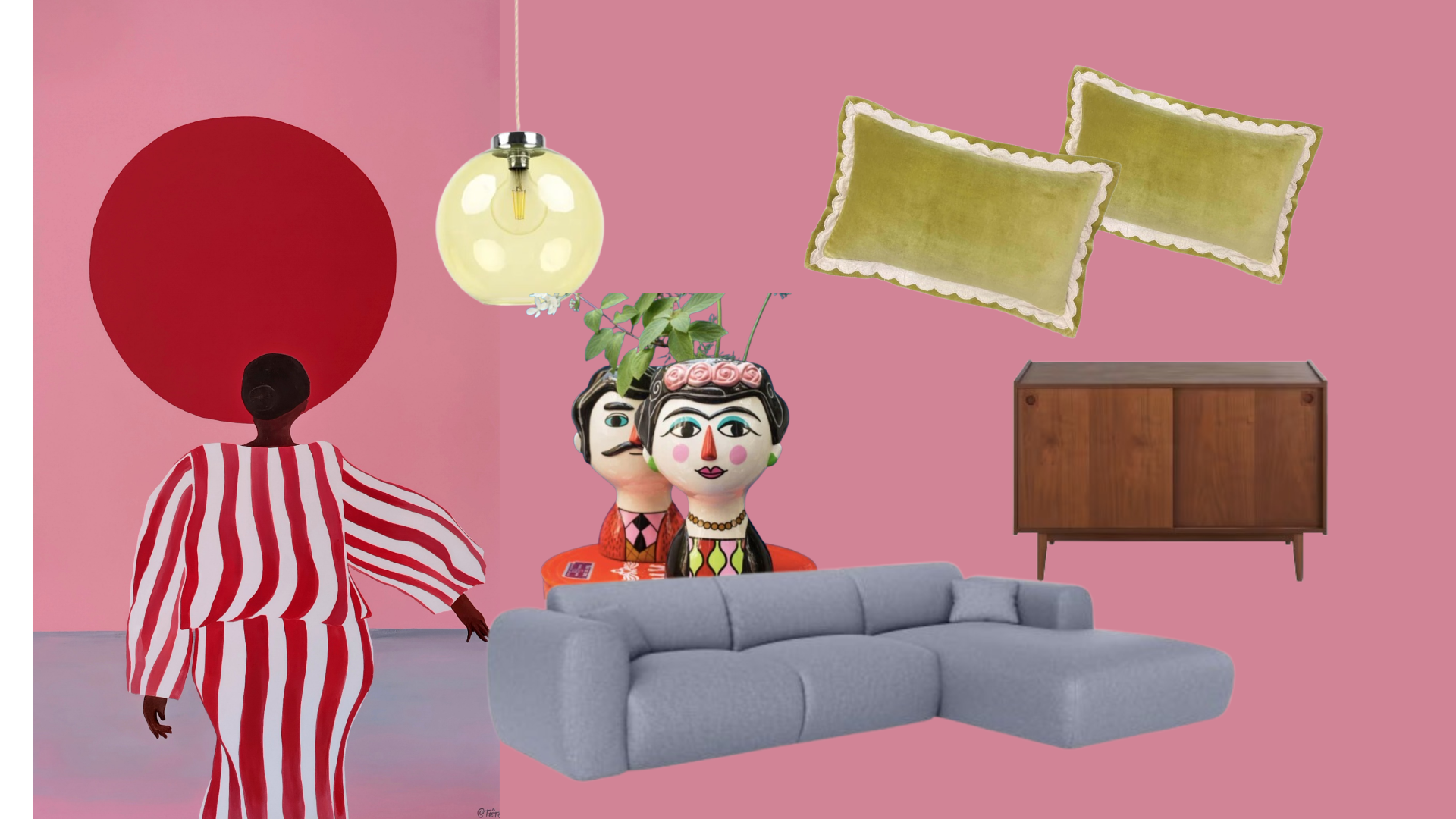
So, I finally got the keys to my new flat in Madrid. Did that mean the drama was over? Of course not. Getting the keys was just the beginning.
I remember when my lawyer casually asked if I was planning to renovate the flat and warned me it would be “another adventure.” Honestly, I thought I’d had enough of those by that point. Back in Budapest, I managed a renovation almost entirely by myself with the help of my dad. But Madrid? Completely different story. This time I was on my own, and the flat needed a fundamental renovation.
The problem was, I didn’t know a single contractor in Madrid… except for the workers who had renovated the apartment below mine when I lived in Chamberí. I’ll never forget the unbearable noise, the 50°C summer heat, and my frustration when I couldn’t even work properly during their construction last August. Being highly sensitive to loud noise (welcome to Spain), I eventually went downstairs to make a fuss, though there wasn’t much I could do, since they had the proper permits.
But here’s where it gets interesting. Instead of just complaining, I dropped a hint: “I’m about to buy a flat — if I need renovation, could you do it for me… with a proper discount, of course, for all this noise?” And just like that, I had a deal before I even owned a property. Classic me — always negotiating.
Nine months later, the renovation started — and luckily, it wasn’t as dramatic as the horror stories you usually hear about renovations in Spain and unreliable workers. But of course, a few hiccups happened along the way.
The first one came from the main boss of the renovation team — a Romanian guy, an electrician by trade, who gave me exactly 15 minutes to decide where I wanted all the plugs in the entire flat (since we were changing all the electrical cables). And I had no idea yet how I’d even arrange my furniture. Somehow, I had to design the whole layout in my head on the spot.
Then came the walls. Originally, we planned to demolish only one — the one separating the living room from the corridor. But soon we realized the living room would still be too small. And since I wanted to turn it into an art space, we decided that same day to take down another wall — the one separating the living room from the main bedroom. In the end, I got nearly 40 square meters (including a small terrace) of open space.
That’s when I realized I needed to rethink where my bedroom would go. We decided to move it to the room facing the garden — quieter air, no cars outside, and, to my surprise, a palm tree I hadn’t even noticed before. By the time I started doubting whether turning one room into a bigger salon was the right move, it was already too late — the next day I got photos showing the walls completely demolished. Pretty fast, considering Spanish standards.
At first, the renovation went surprisingly smoothly. The workers were progressing quickly, and I had given them just a month and a half to finish since I needed to move in. But then came the not-so-fun part — flooring decisions.
I’m great at choosing design elements and furniture, but when it came to floors… drama. In the bedroom and kitchen, I decided to keep the original granite flooring (yes, it looks a bit like a cemetery, but let’s call it industrial chic). For the main 40 m² area, I wanted something that would recreate the oak herringbone parquet I had in my Budapest flat — the original 1930s one.
In Madrid, if you want real parquet like that, you’re looking at around €6,000. A total joke, but wood isn’t cheap. After visiting what felt like every flooring shop in Madrid — and losing all hope among endless rows of ugly laminate panels, I finally found one shop, tucked in a corner, that had panels with just the right design. Installed properly, they could totally pass for real parquet.
I bought 40 m² for just over €1,000, plus a few extra meters to keep the same design in the smaller room. The result? Almost real. As I always say — fake it till you make it.

So, we had the layout, we had the flooring — next came the dramatic step: designing a small kitchen.
Since I decided to keep my granite “cemetery-style” floor, I knew I needed something elegant to balance it. Ikea had this dark green kitchen line that I instantly fell in love with. Paired with a black worktop, black sink with an old gold tap, black fridge, and my forever obsession — a black rustic stove with old gold details, I imagined a kind of modern glam meets industrial vibe.
The kitchen is tiny, so every centimeter mattered. I spent weeks planning it, making sure every detail matched. The challenge? The flat still had those hideous old aluminum windows. Painting them white was the only way to make them remotely acceptable.
And, of course, that’s where the fuck-ups started. The boss of the renovation crew — same Romanian guy, told me black tiles would look amazing and that “all the rich Mexicans are buying this design now.” I knew in my gut black tiles would be too much, but for some reason, I didn’t follow my instinct. Big mistake.
Once the tiles went up, they looked fine at first — from a distance, with tape still covering the edges. But when the Ikea furniture arrived, the whole space looked like a dark cave. So, I made a quick decision: we had to paint the tiles white.
That’s when it became painfully clear that my Romanian team was great at heavy work — floors, demolition, walls — but when it came to finishing details, total disaster. The guy painted the tiles so badly that honestly, a five-year-old could’ve done it better. When I peeled off the tape, it was obvious the wall was crumbling. They told me it couldn’t be fixed — that “this is just how the work looks.” I even heard something along the lines of, “You paid for a Mercedes type of job, not a Porsche.” Sure, I got a good deal, but regardless of the price, the work should still be finished properly.

In the end, the main boss had to redo everything himself once he came back from vacation — all already paid, of course (cash in advance, classic).
Meanwhile, one of the workers quit right after the boss returned, claiming his wife would divorce him if he didn’t take a proper holiday. So naturally, he left the rest of the mess to his boss-slash-business partner. He’d nearly finished putting the skirting boards, but didn’t bother to clean the silicone, leaving everything filthy.
The only one who actually cared about details was the Latino worker — the quietest guy on the team, but the most precise. He worked a bit slower, but he was always on time, came first, left last… while the Romanian one usually showed up late and disappeared early.
But at least the major work was done — and the flat was truly transformed from a super ugly, cluttered mess into a bright, open space.
The father of one of the Romanian workers, who also helped during the first few weeks, actually had a great sense of construction. Thanks to him, the whole layout turned out beautifully. Unfortunately, he left halfway through to go back to Romania for holidays, and from that point on, things stopped running as smoothly.
The main deal, of course, was with the boss — technically a partner of two others, but he was leading my renovation. Already last year, I had a feeling he might be a bit of a problem. He’s 53, and let’s just say… a visit to the dentist wouldn’t hurt him. In general, he’s a kind and helpful guy — but here’s the thing with some Eastern European men of that generation: they tend to make comments that toe the line of sexual harassment. And it often flies under the radar because people treat it as “part of the culture.”
I brushed it off several times, but when he came back from his holiday and started working again with me and the Latino guy, his comments got out of hand. That was the moment when, in my not-so-broken Spanish anymore, I had to tell him that if he didn’t calm down, I’d call both the police and his wife. He looked shocked, but I think he realized pretty quickly that I wasn’t the type to stay quiet — I might be dealing with everything alone, but my self-defense mode comes with a very big mouth.
To be fair, I can’t say many bad things about him. He really was helpful, and we had plenty of decent conversations. But, well — once a man, always a man.
The funniest part about him, though, was his spiritual transformation. He had converted to Judaism and loved to preach to me about why it was the best religion. Every time I mentioned I’d get something done on a Saturday — my day off — he’d remind me that Saturday is for God and I should do it beforehand. He even tried to convince me to find a “good man” at the synagogue here in Madrid.
And I’m like: “Sir, didn’t you just make a questionable comment five minutes ago? And now you’re trying to sell me on the idea that the ‘good men’ are in your church?”
What he didn’t know is that, when I was very young and living in the U.S., I once worked briefly at an Ultra-Orthodox Jewish summer camp. I know that religion inside out. That experience was actually what made me realize something important — I strongly believe in God, but I don’t believe in any organized religion.
So, after another month of dealing with him, the renovation was finally completed, with only a few minor details left to finish. As I mentioned in my previous article, one of the main reasons I wanted a bigger renovation was to partially convert the space into an art studio where I could run my fashion workshops.
The idea actually came from my time in Budapest. One of my friends, a painter, bought a 110 m² flat in Budapest’s VIII district on Nagymező utca — for years considered a pretty sketchy street. Back in the day, it honestly felt like being in a third-world neighborhood. But, as gentrification tends to do, the area started transforming. Artists moved in, and soon it became the real hub for creativity.
My friend saw the opportunity. He bought the large flat for a very low price, did a complete renovation, and cleverly divided the space — half into his living area, half into his own gallery. Why pay commissions to other galleries when you can host exhibitions at home? The flat had nearly 5-meter-high ceilings, beautiful old oak flooring, and a renovation that was an absolute masterpiece. Art Salon Contemporary became one of my favorite places to hang out in Budapest.

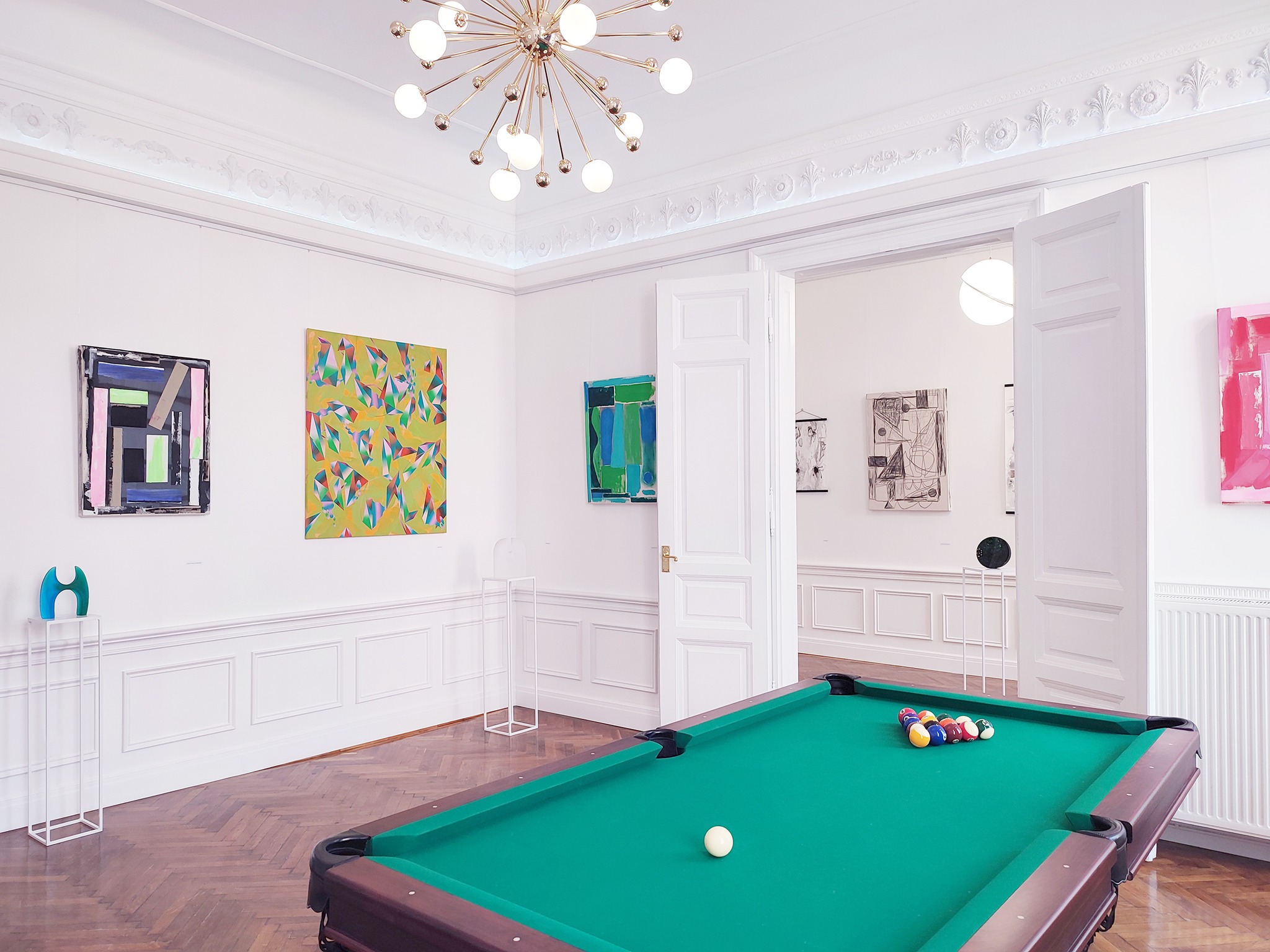
He didn’t just host his own openings — he invited other artists to exhibit, and eventually, the flat became a hotspot for prominent figures from the art scene, business, and design world. Events like “Rule Night” or “Cigar Night” became legendary. I even hosted my fashion workshops there and played a few rounds of billiards.
That’s exactly the vision I wanted for my Madrid flat. I needed one empty wall for projections and fashion presentations, plus enough open space for participants. So, I painted the flat all white on purpose — to maximize light and make the space feel as large as possible. I only left one wall untouched, knowing it would define the flat as an art space.
And that’s another story, in the next article, I’ll tell you about what we did with one of my friends, probably one of the best muralists in Madrid, to bring the space truly to life.
Have you ever turned a regular flat into your dream creative space?
I’d love to hear your story!