So there is finally time to sum up what the “pijas madrileñas” are actually wearing. I took under my loop the full Chamberí barrio, as I want to focus on this one first.
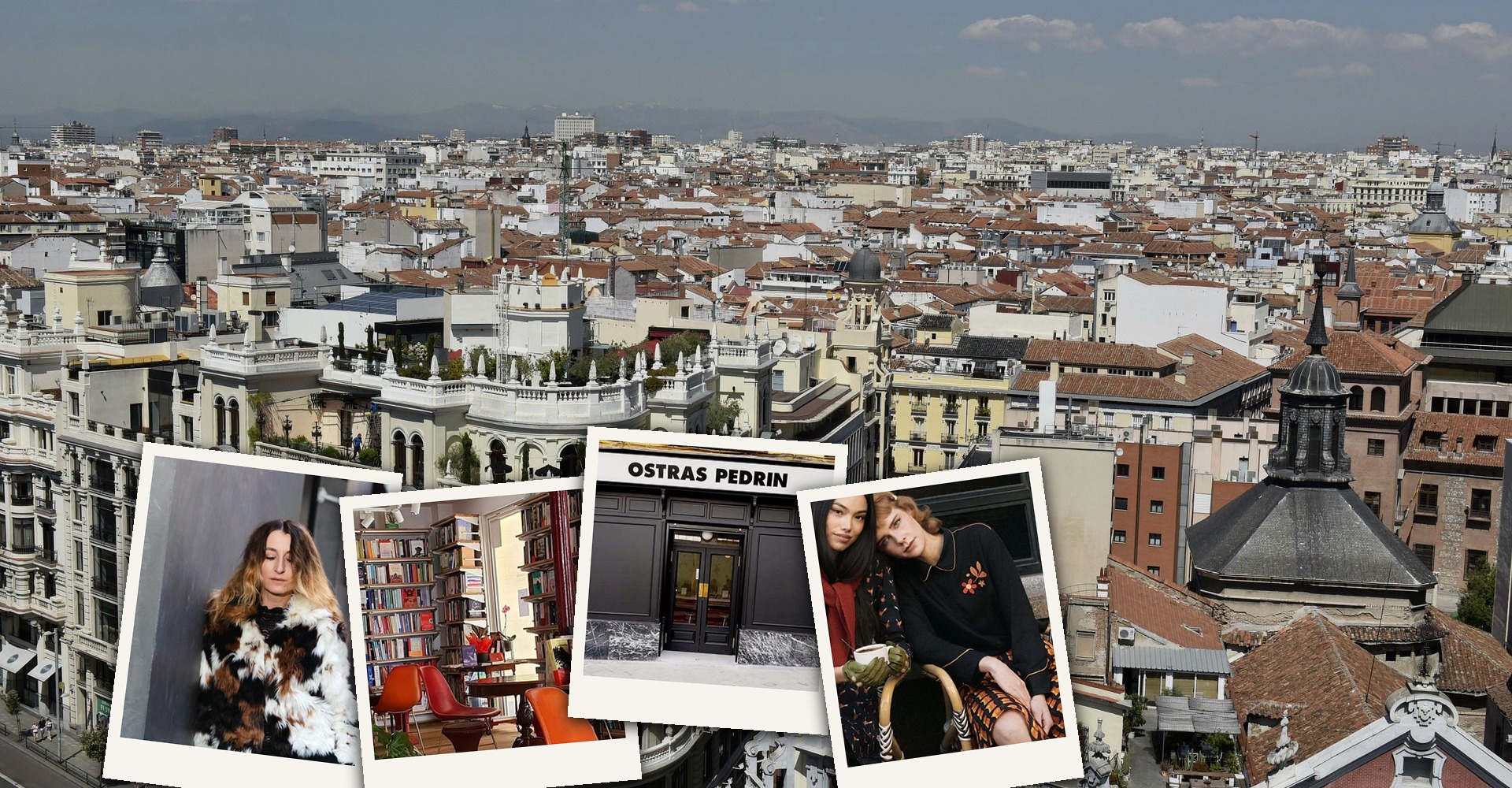
Chamberí is divided into four parts: Gaztambide, Arapiles, Trafalgar, and Almagro. For this analysis, I will focus only on Trafalgar and Almagro, as this is where my favourite “pijas” are hanging out, and also where you find a concentration of stores that make it easy to reconstruct this very distinctive Spanish look.
So what is the actual difference between the Trafalgar and Almagro barrios when it comes to how “pijas” dress? Because yes — it’s subtle, but it’s there.
Trafalgar has a more youthful energy, and here I’m being very precise: I’m talking about the area from Plaza de Bilbao to Quevedo metro station, including Fuencarral street and all the streets around Plaza de Olavide, stretching up towards Calle de Ponzano and Calle de Santa Engracia, which in an unofficial way act as a soft dividing line between Trafalgar and Almagro, not really separating two worlds but showing how they slowly change into one another.
The best places to observe this are Plaza de Olavide — which gets quite crowded — and Calle Ponzano, where from Thursday to Saturday it basically turns into a fashion show. I’ve spent countless hours there sitting and observing people. I used to live one street behind Ponzano and I was a regular in Plaza de Olavide for more than two years. Now, even if I live in another part of the city, I’m still a regular in Chamberí, as it is by far my favourite barrio in Madrid, and my work in business in Nuevos Ministerios keeps the professional side of my life closely connected to this area.
So what is the look here?
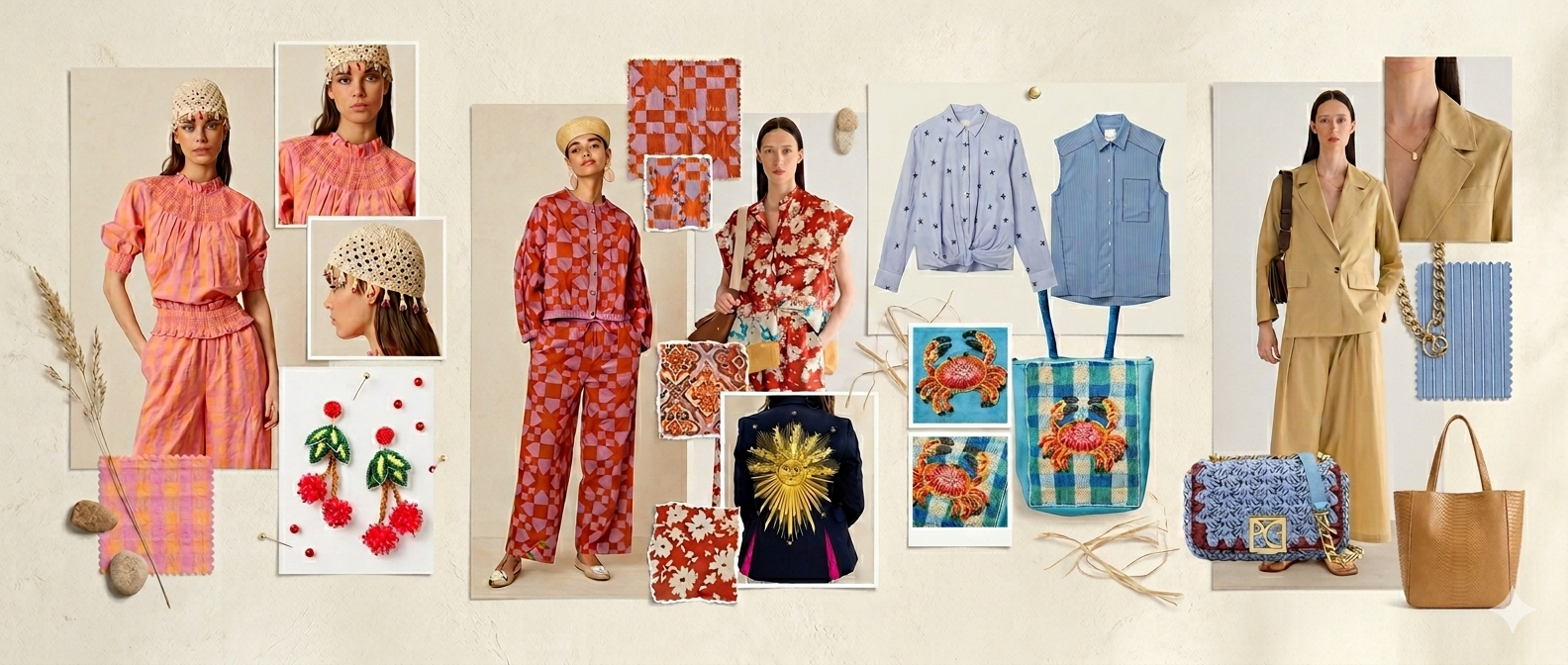
There are a lot of stripes, light fabrics, shirts with small, cute prints, blouses with structure, little scarves thrown in without trying too hard. Hair is usually long and worn loose — not overstyled, but definitely maintained.
Colours are more mixed than you would expect: blues, greens, soft contrasts, prints layered together. It’s not chaotic, but it’s also not as controlled. Patterns are combined more freely, and the whole look feels lighter, more social, less rigid.
If you look closer, there are very clear repeating elements. High-waisted jeans or straight trousers, often slightly cropped. Cotton shirts — often men’s style — worn a bit oversized. Knitwear is thin, almost always layered over shoulders or tied loosely. Outerwear is light: trench coats, short jackets, nothing heavy or too structured.
Shoes are consistent: ballet flats, espadrilles in warmer months, loafers, or very clean sneakers. Heels are rare during the day — everything is built for walking between coffee, terraces, and bars.
Accessories are small but very present: delicate jewellery, watches, sometimes a scarf either on the neck or tied to the bag. Bags are medium-sized, practical, never screaming logos.
What stands out is that everything looks easy, but it’s not accidental. It’s a controlled kind of casual — relaxed, but within a very clear aesthetic framework.
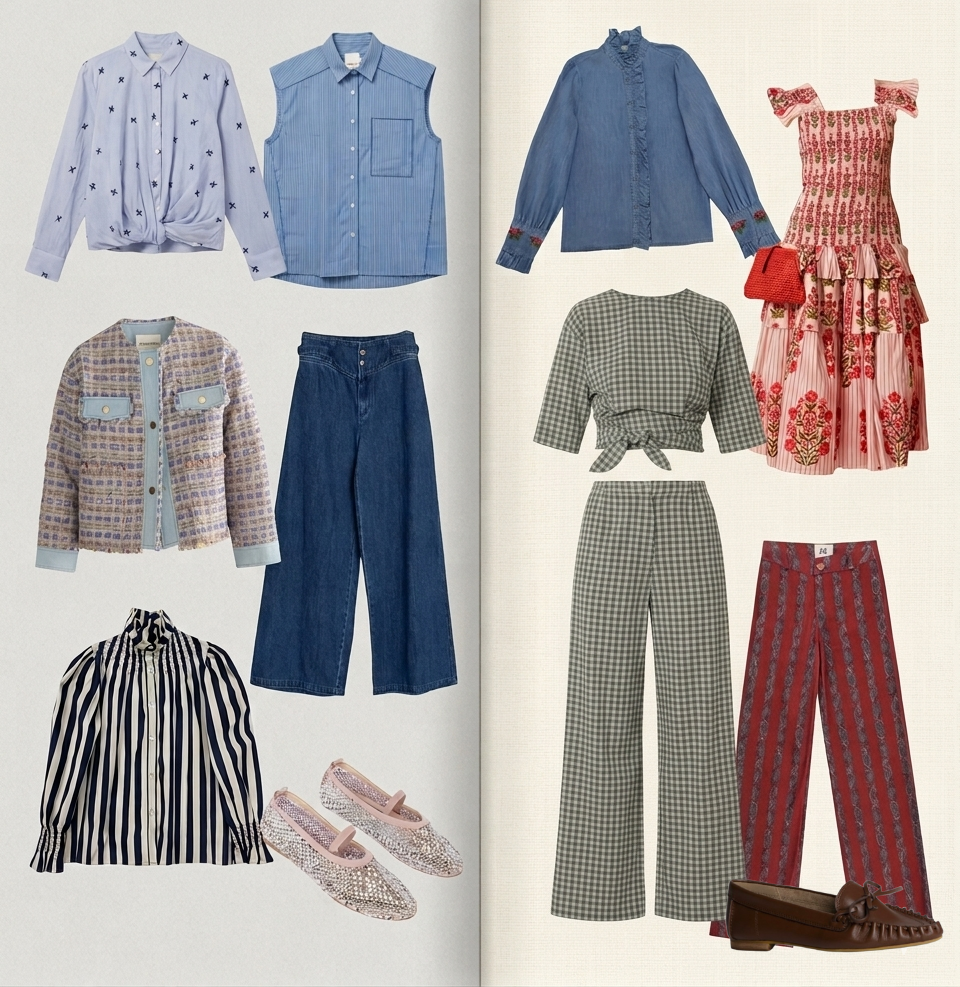 Let’s talk about the stores, including the small boutiques starting from Plaza de Bilbao and ending around Quevedo metro station. If you want to get a feeling of how to dress like a “pija”, you move through places like Zúa, Amore, El Espejo Te Dice Guapa, Indi & Cold, Caramel, and Rughara Haus.
These stores sit in a very specific space — often more affordable than Zara, but much more Spanish in character when it comes to design, fabrics, and silhouettes. They are not trying to be international or overly trendy; they stay very rooted in a local aesthetic.
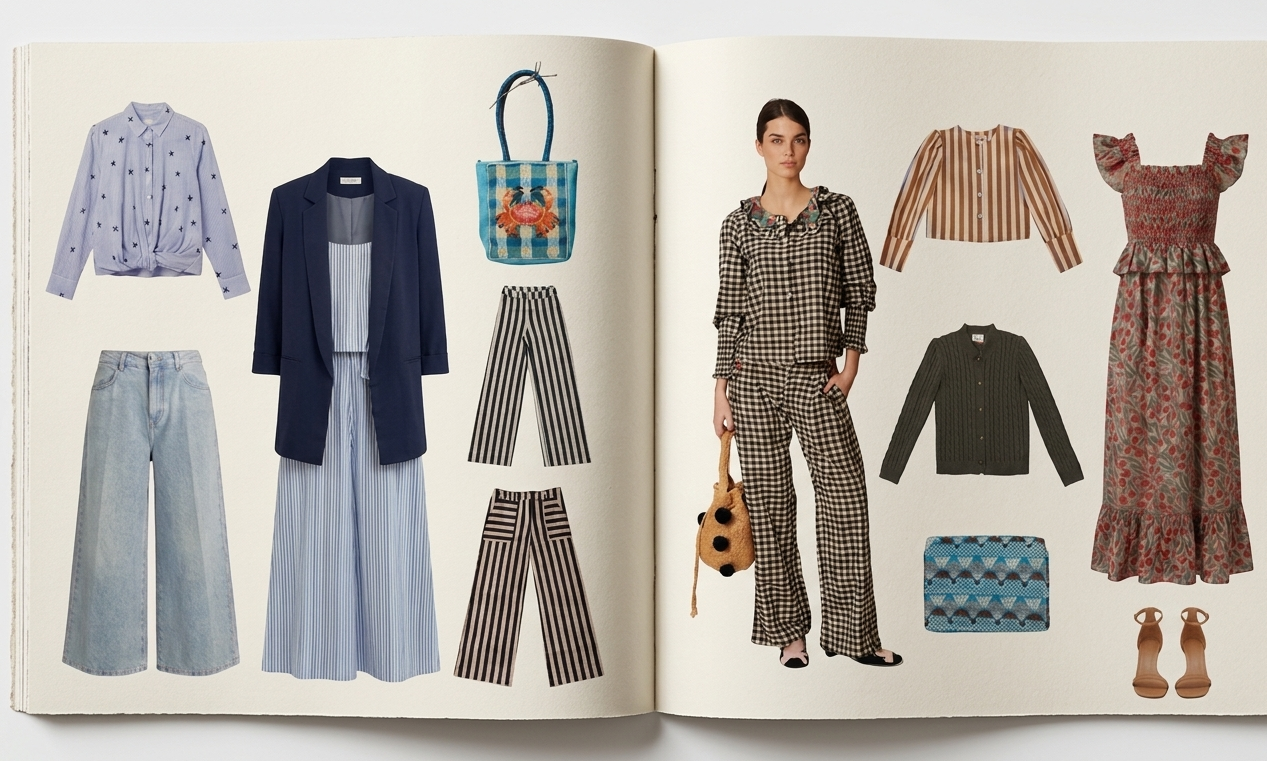 That’s exactly why I often send my clients there for a small tour — not just to shop, but to understand the visual language behind this style and pick pieces that reflect that distinctive Spanish identity in a very natural way.
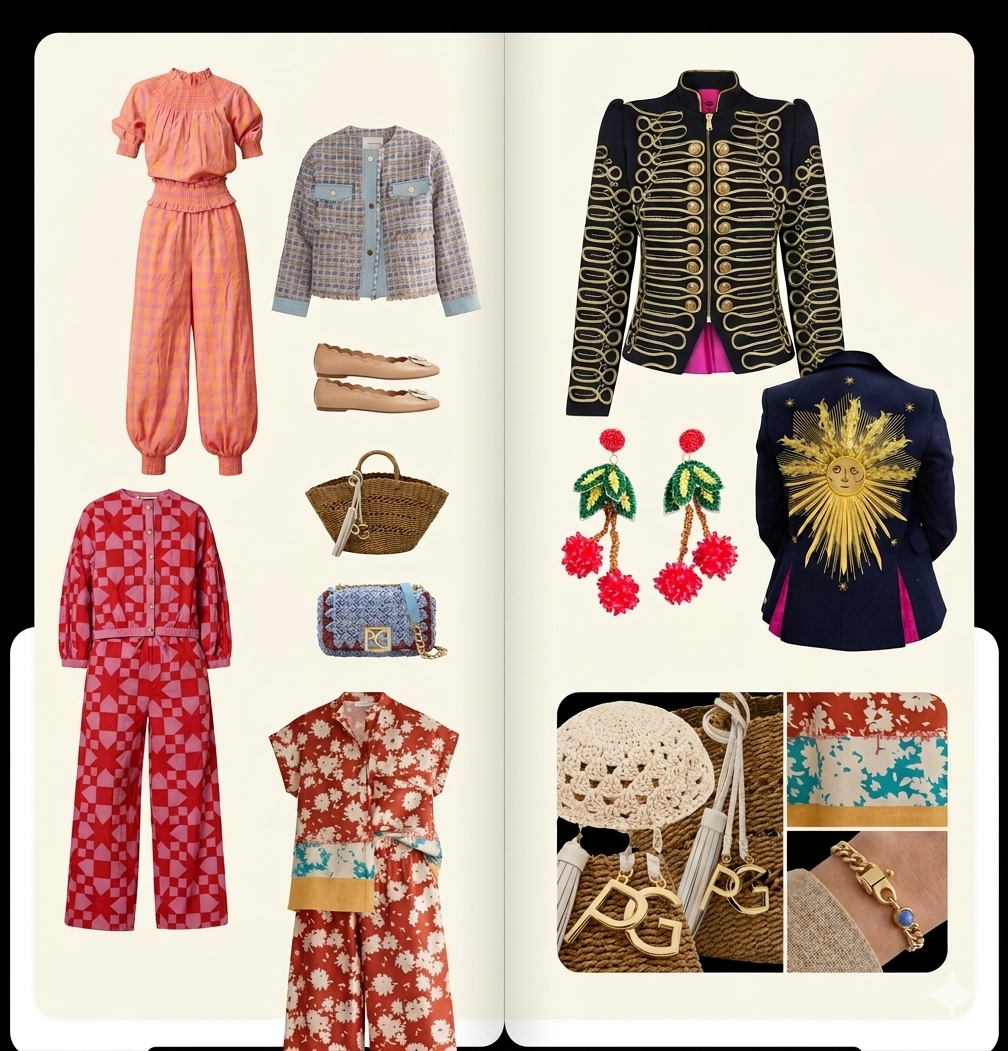
Of course, “pijas” will also wear, or at least mix in, higher-end Spanish brands ranging from the bold and colourful world of Jorge Vázquez (my absolute favourite Spanish designer), to Coosy and La Condesa (mind-blowing jackets ) deathless Bimba y Lola, and then moving into a more elegant, minimal luxury aesthetic like Purificación García, Roberto Verino, Pedro del Hierro or shoes from Mardecleo.
 Now moving to the Almagro barrio, where I have recently been spending a significant amount of my time, and where I have found two perfect restaurants with outdoor seating for my people-watching. Sometimes I hang out there with my architect friend, who is a big fan of well-dressed women, so he is in a way a good asset. We do people-watching together quite often.
The streets that are important here are definitely Calle Almagro, Calle Zurbano, Calle Zurbarán, Calle Orfila, and all the small streets behind Calle Génova.
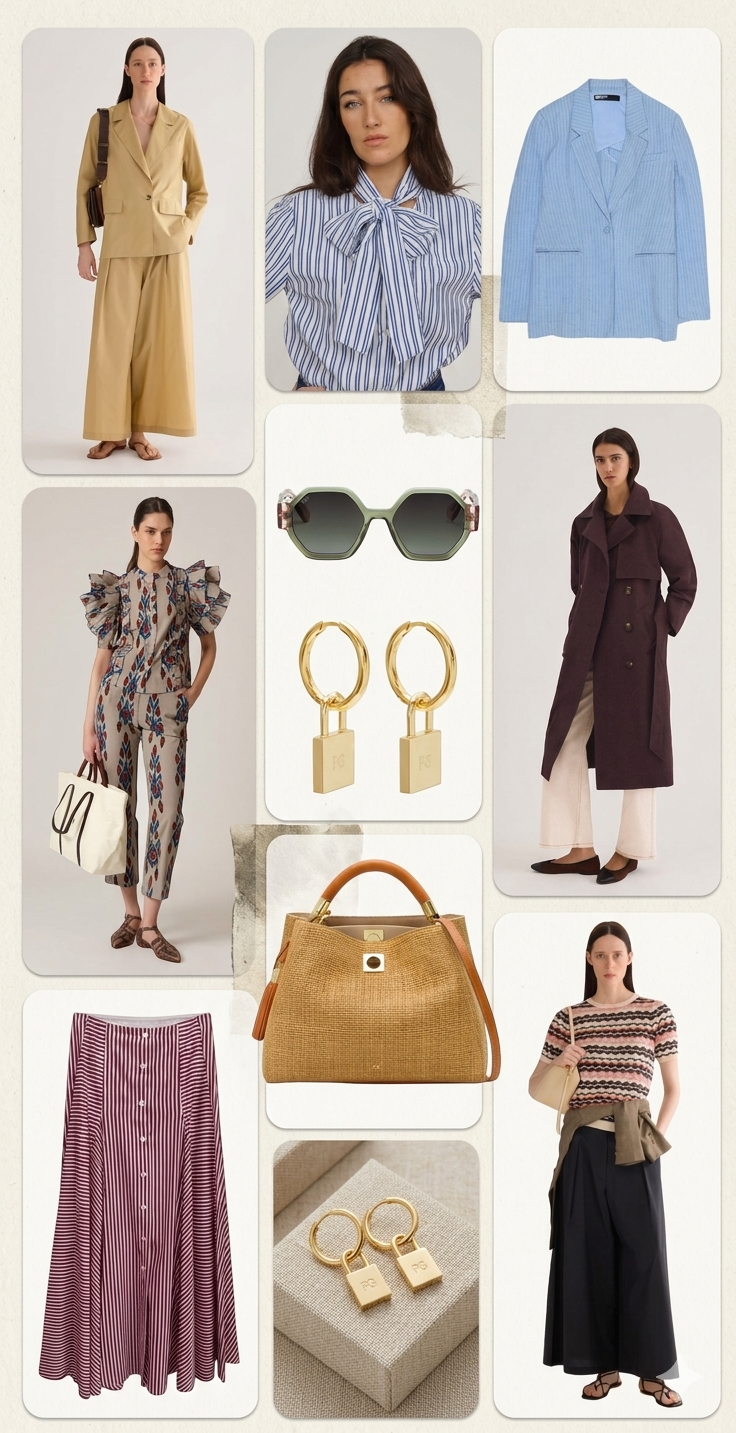
In Almagro, the “pija” style becomes more polished and put together compared to Trafalgar. There is a stronger sense of structure, coordination, and overall finish in how outfits are built, as if everything is slightly more considered. Colours are still present, but they are used in a more controlled way, and the general palette feels more restrained and less playful.
At the same time, it is not a completely different language. You still see familiar elements like stripes, light prints, and subtle details, just styled in a more composed and less experimental way. The difference is less about what is worn, and more about how consistently everything is put together — more refined, more stable, and slightly more formal, but still clearly within the same “pija” framework.
 Almagro is a very residential area within Chamberí, characterized by quiet streets and a stable local population. It is not a tourist area, as there is very little of interest from a visitor’s perspective unless you are actually living there — in which case you naturally become part of the local rhythm.
It sits close to the Castellana axis, so there is some proximity to embassies, financial institutions, and professional offices, but the area itself remains primarily residential rather than business-driven. This is exactly where you can observe what local “pijas” are wearing, as it reflects their everyday life rather than a constructed look.
So if you want to embrace a bit of this style and understand the characteristics of Spanish fashion in general, you already have the list of stores, as well as the key places to hang out and observe it in real life.
If someone observed you for a week without knowing you, what would your clothes say about you?