Since I left Instagram nearly two years ago (best decision ever), I’ve spent a lot more time on LinkedIn instead. Maybe it’s because of where I am in life now, business interests me more than reels about nothing. On LinkedIn you actually see real glimpses into people’s working lives, and one thing that’s hard not to notice is what women wear to work. Being Polish, I’ve always had a slight aversion to the structured jacket-and-skirt-or-trousers combo that so many women wear to the office, almost like a uniform.
Looking at Polish streets in general, colour and interesting patterns are missing. Women in their mid-thirties or early forties often look years older than they actually are. I started noticing this pattern again and again, scrolling through LinkedIn, on the street, everywhere. I’d see women with great faces and great bodies wearing clothes, makeup, jewellery that aged them by six or seven years, nothing wrong with them, just choices that did them no favours. I notice this contrast even more since moving to Spain, where colour, pattern, texture show up everywhere regardless of age or job title.
There’s a reason for this, and it’s not really about taste. Polish women are now better educated than men and work in the same companies, doing the same jobs, but they still come home to do most of the second job nobody pays for: the household, the kids, the husband. Babysitters and housekeepers still aren’t a normal thing here the way they are elsewhere. So you end up with women doing double the work and getting credit for none of it. I think that shows up in what they wear. When you’re stretched that thin, “safe” and “invisible” start to feel like the only options left.
Big cities like Warsaw, Kraków, Wrocław are ahead on this, more colour, more courage. Smaller cities lag behind, almost embarrassingly so. But in my own hometown, Stalowa Wola, I got lucky. I know a fashion designer there, Ewa Zbaraszewska, who runs a genuinely great boutique with international delivery. We met to talk fabric and colour and ended up talking for four hours, most of it about Polish society and the very traditional, very male-dominated structure underneath it. We couldn’t stop, so I asked her to sit down properly and talk to me about it.
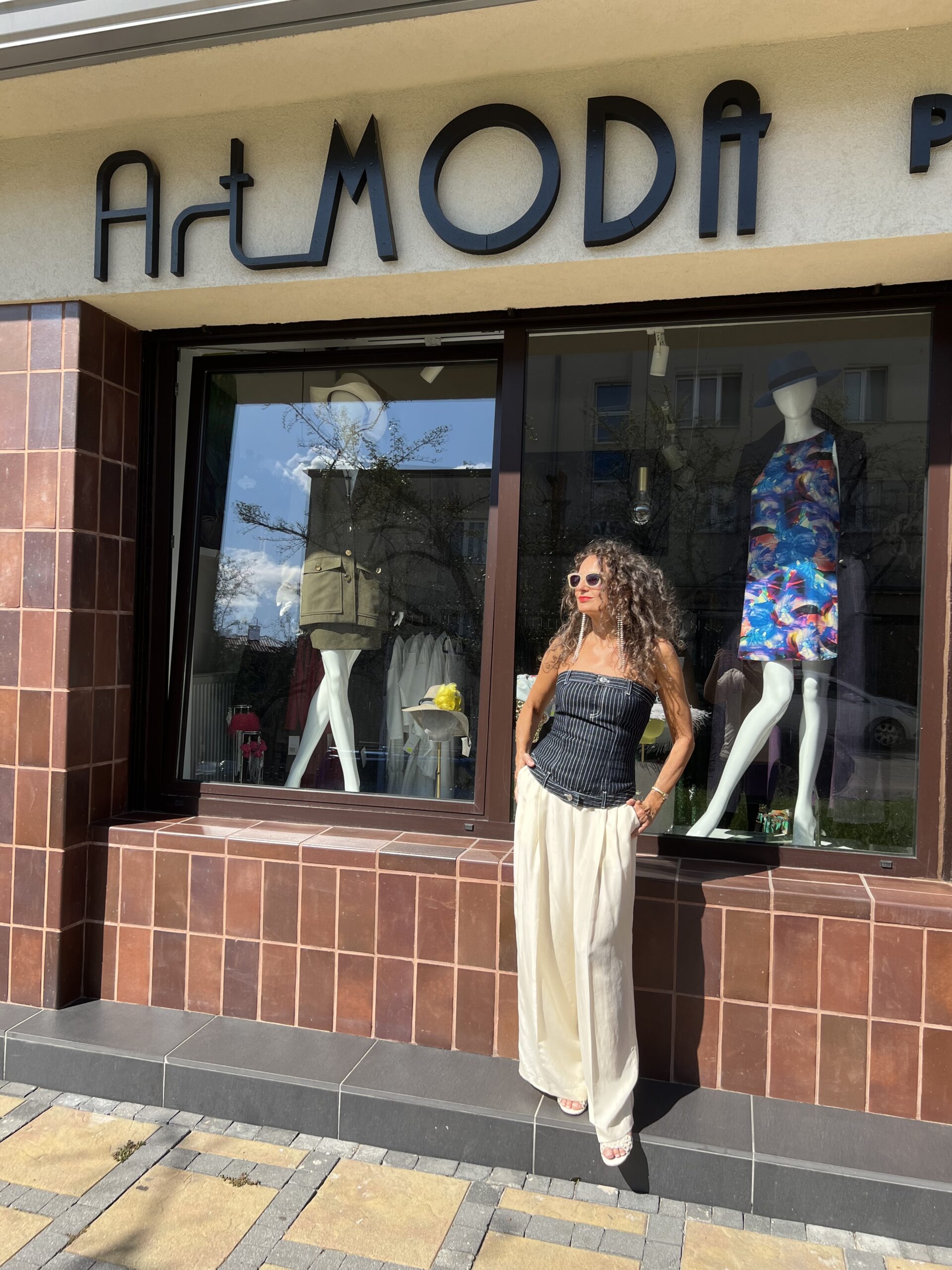
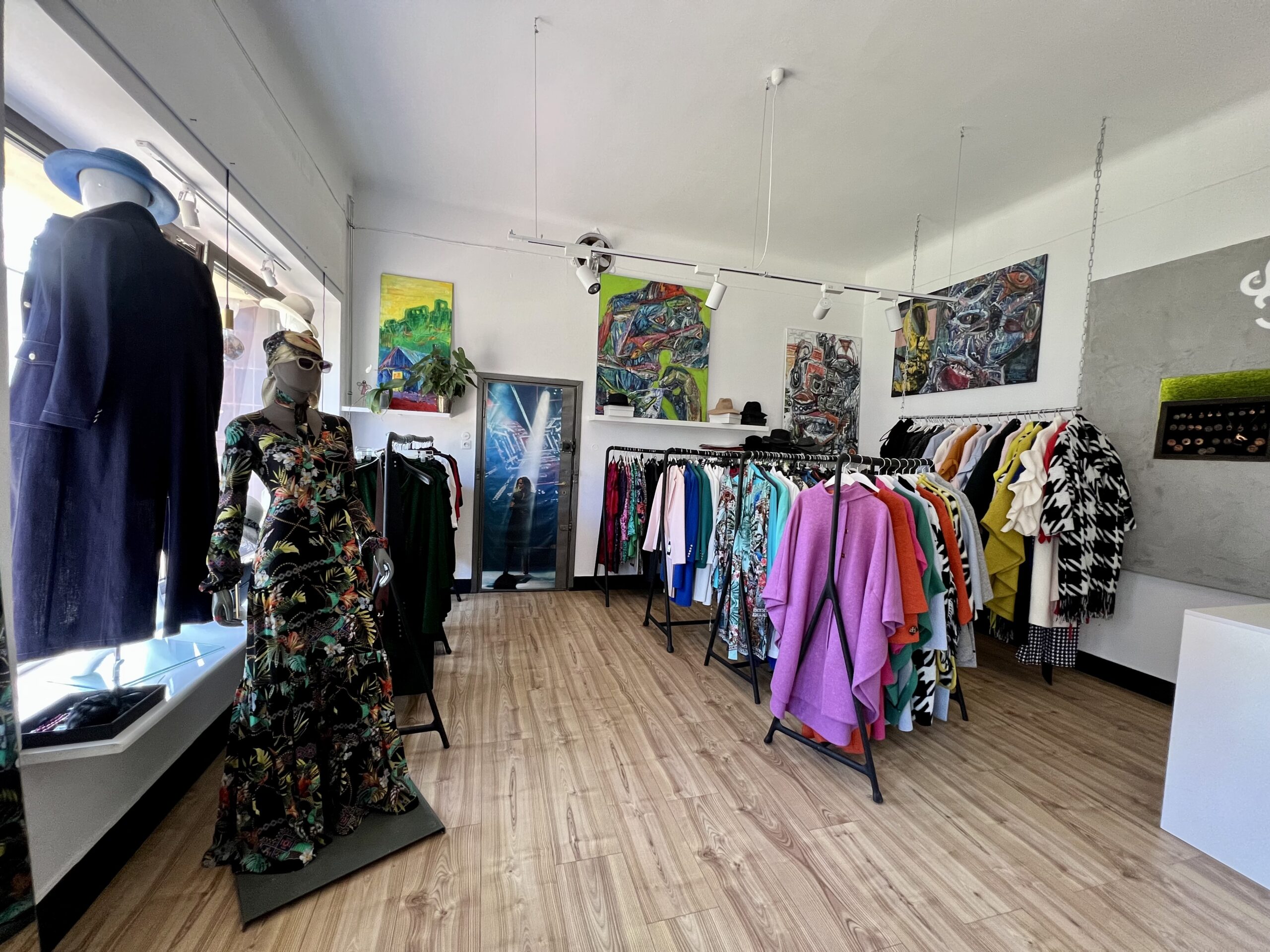
For nine years you’ve been dressing Polish women in Stalowa Wola. When a woman walks into Art Moda for the first time, what does she usually look like?
Since 2017 I’ve run my own boutique, Art Moda Polscy Projektanci, in Stalowa Wola. Different kinds of customers visit me, certainly women looking for their dream wardrobe, but also their own unique style. I often watch the moment a customer walks in and starts looking through the collections. Women react positively right away to the designs, but when I suggest trying something on, I often notice slight embarrassment, hesitation. Women usually come to me dressed in muted, so-called “safe” colours.
When a customer picks up something colourful or with a bold print, what happens on her face? Does desire come first, then fear, or something else entirely?
When I suggest a more saturated colour or a bolder, more architectural cut, I see and almost feel the customer’s resistance.
You started designing because you couldn’t find what you were looking for on the Polish market. What exactly was missing, and why do you think it wasn’t there?
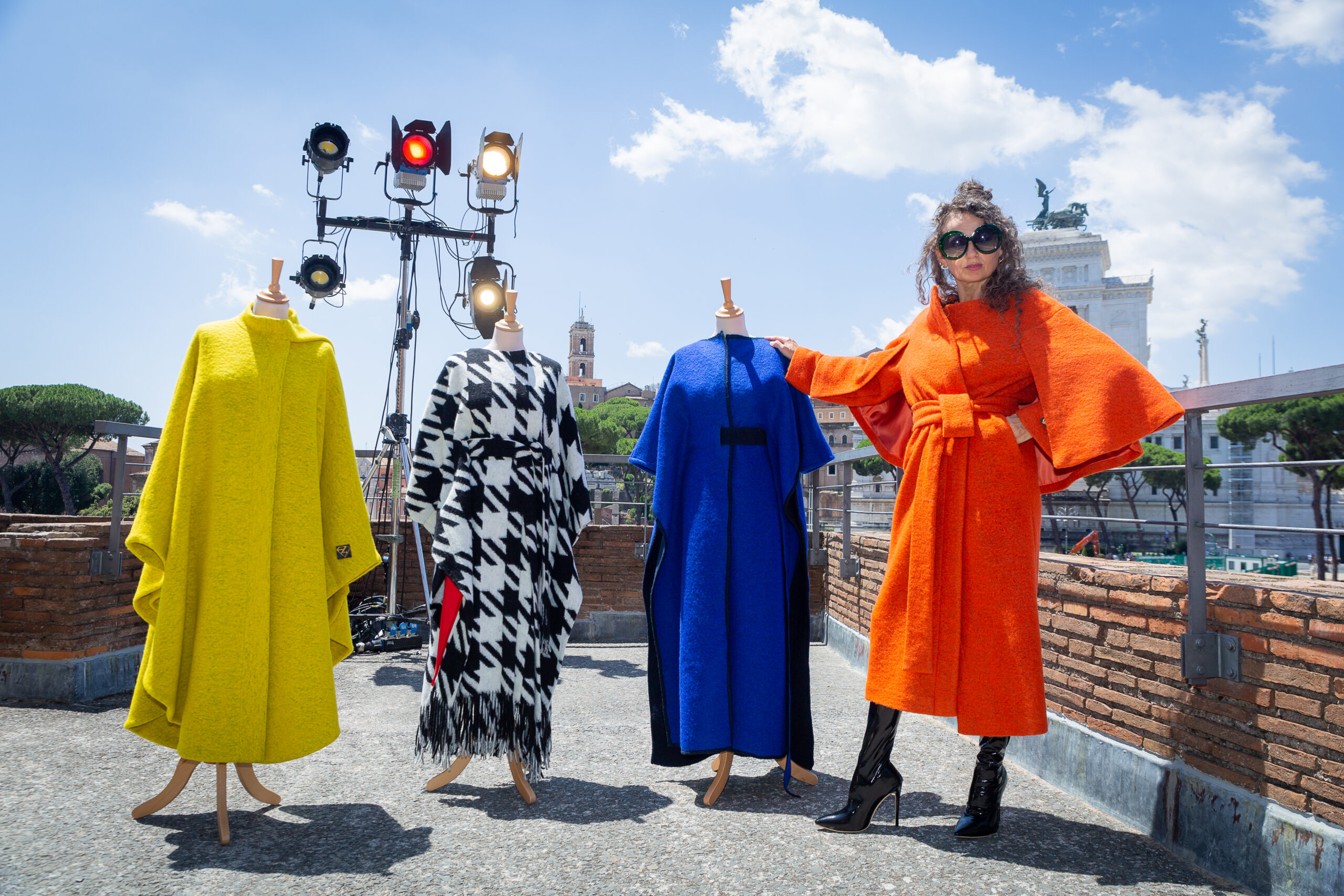
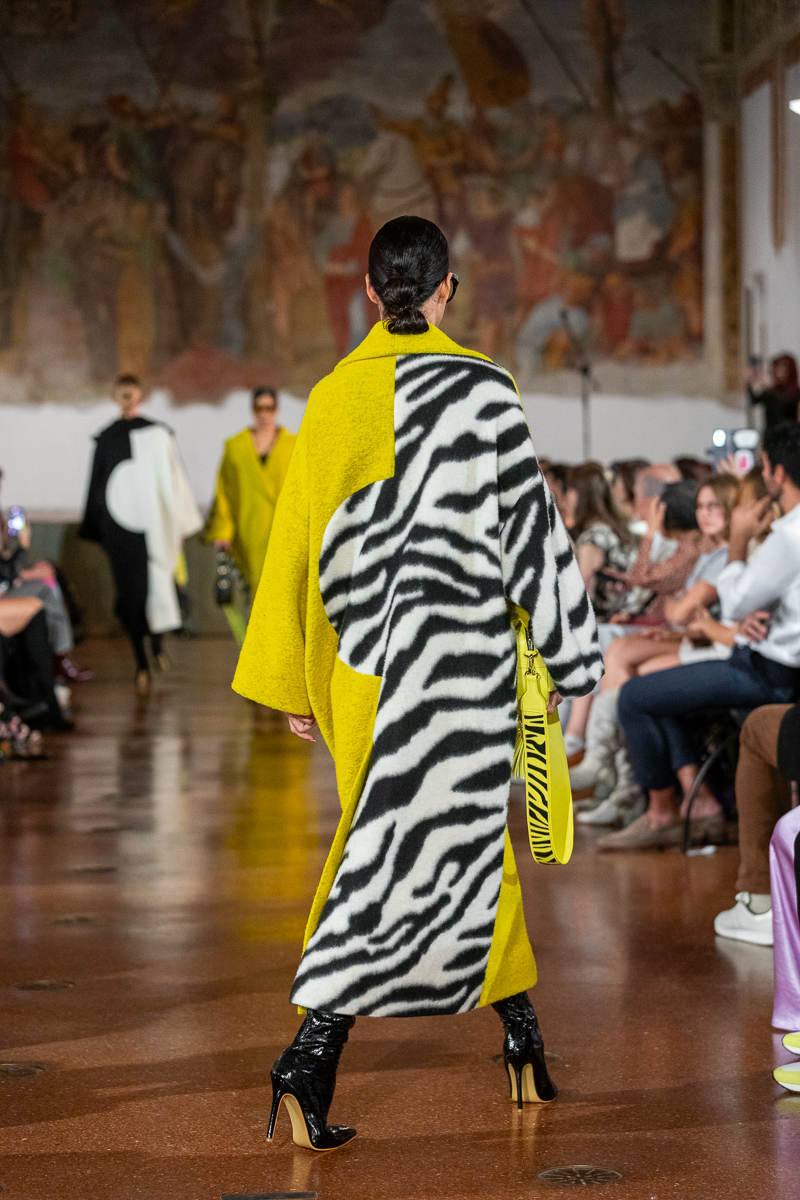
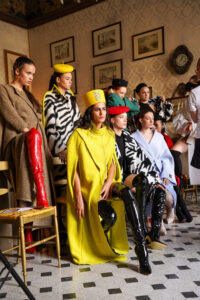
Before I opened Art Moda I did reconnaissance in my city, I visited every boutique, got to know what stock they carried, and noticed there was very little Polish-made clothing among it. So I concluded there was a niche for me, and since I value working directly with artists and designers, I decided not to compete with what already existed, but to offer something completely different. That’s how bold collections from excellent Polish designers ended up in my boutique. But even among those artistic collections, I couldn’t find outerwear in saturated colours.
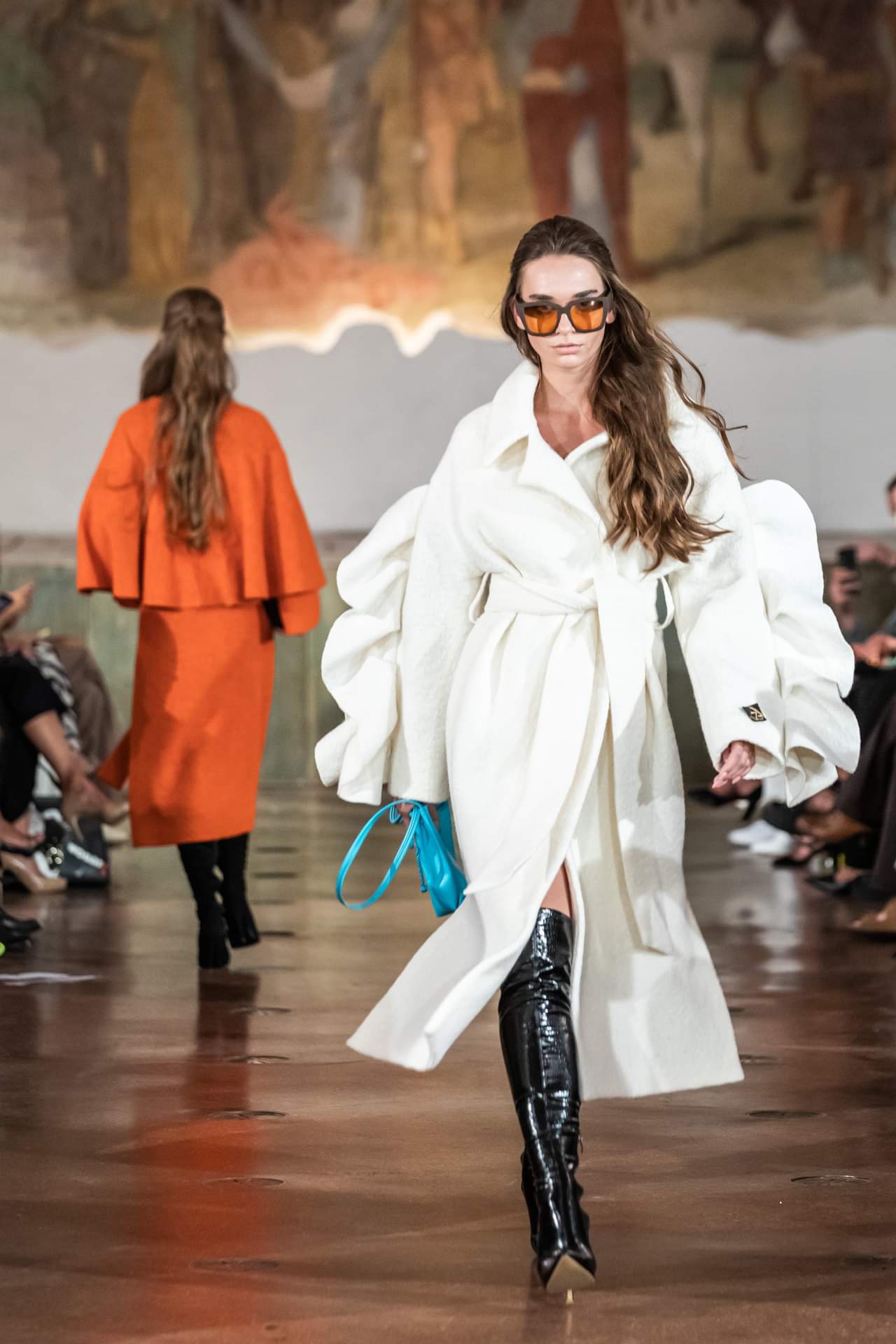
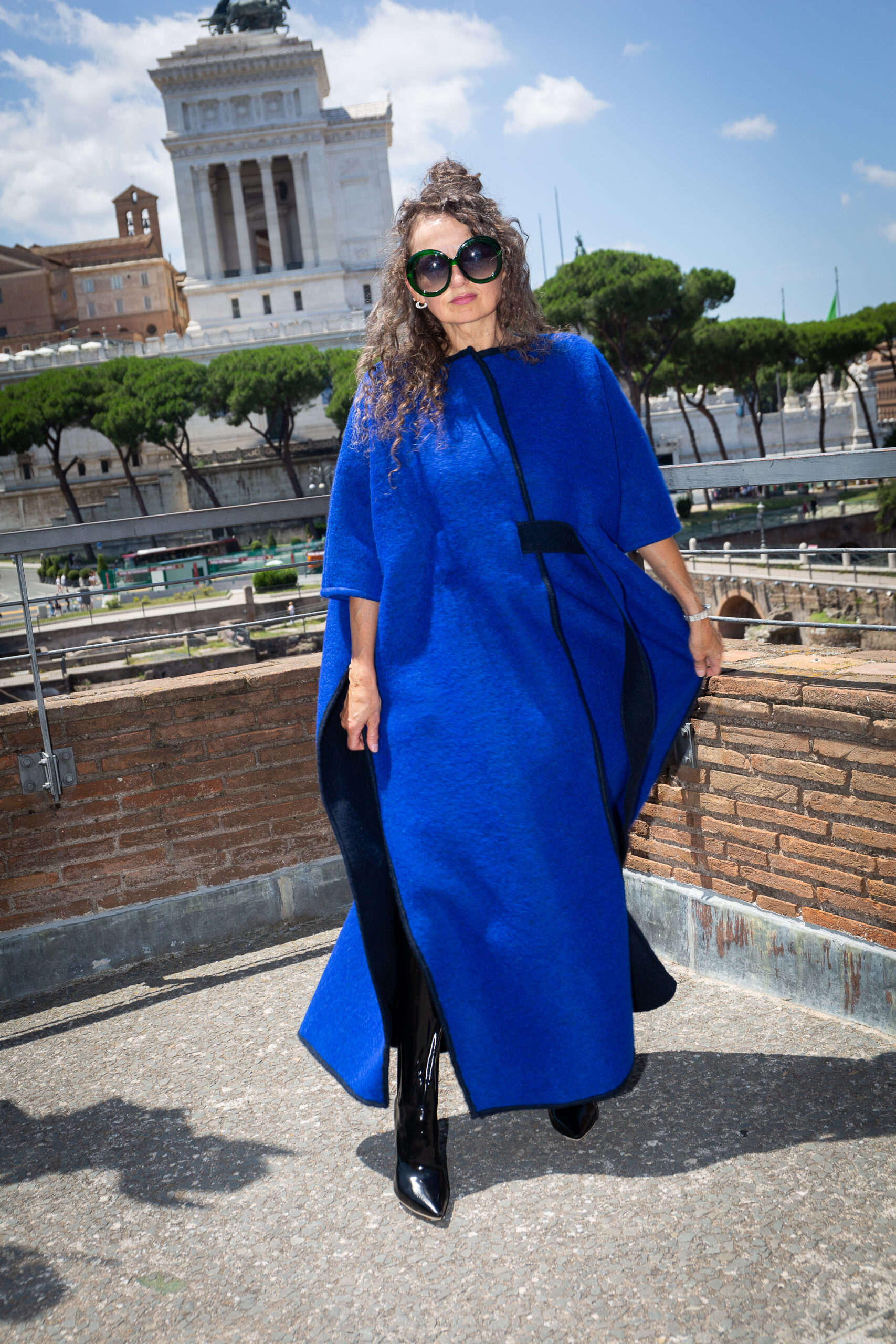
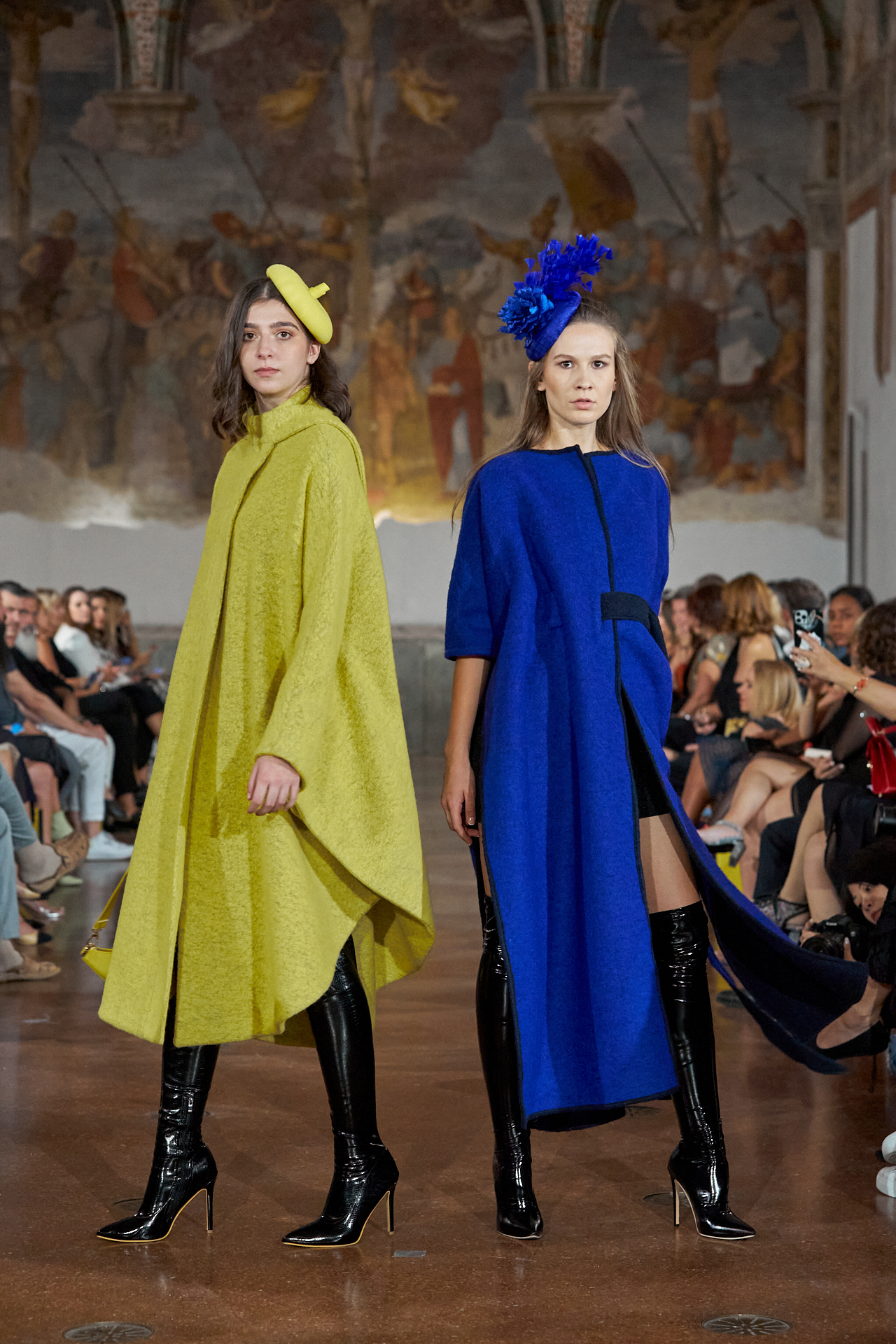
Your coats come in intense colours, sky blue, bold shapes. In a country where most women reach for black and navy, who is your customer?
Our climate during spring, autumn and winter forces us to wear coats, capes and jackets. Unfortunately usually in earth tones, while I dreamed of a coat in fuchsia, lemon, or juicy orange. And it was exactly out of that need that my first design was born, a coat in a heavenly shade of blue.
Do you remember a moment when a woman put on something colourful in your shop and something changed in her, literally, in how she stood?
I remember the look on one customer’s face when she saw me through the boutique window during a fitting, as the prototype of the blue coat was being made. She walked in and said, “What is that?! It has to be mine!” I’ve witnessed similar situations many times, a customer puts on a colour or a bold print and her expression changes, she notices herself that the colour adds to her charm, brightens her face, makes her look like she’s blooming.
Many Polish women working in offices seem to dress to look older, more serious, less visible, to be taken seriously on male terms. Do you see this in your customers?
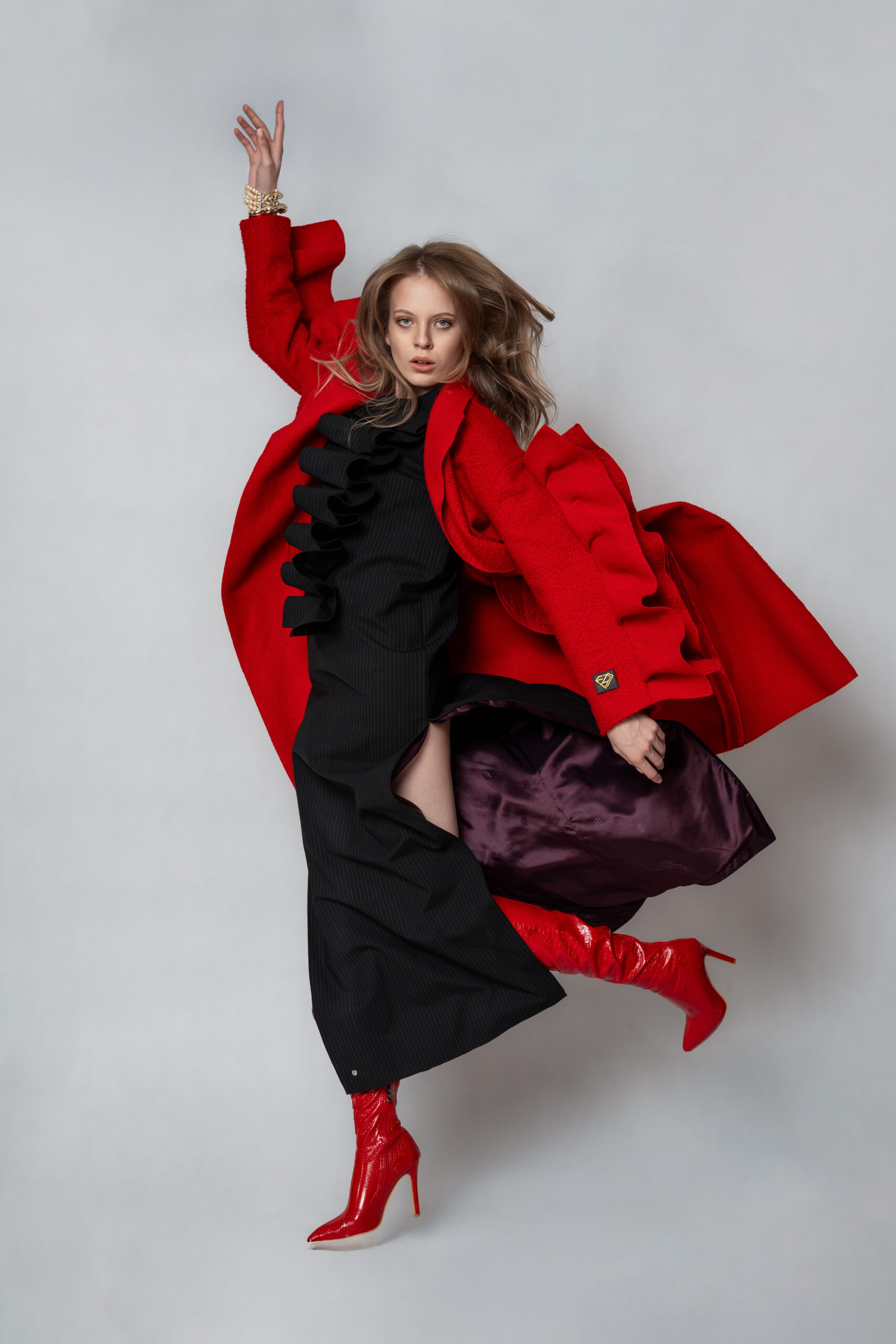
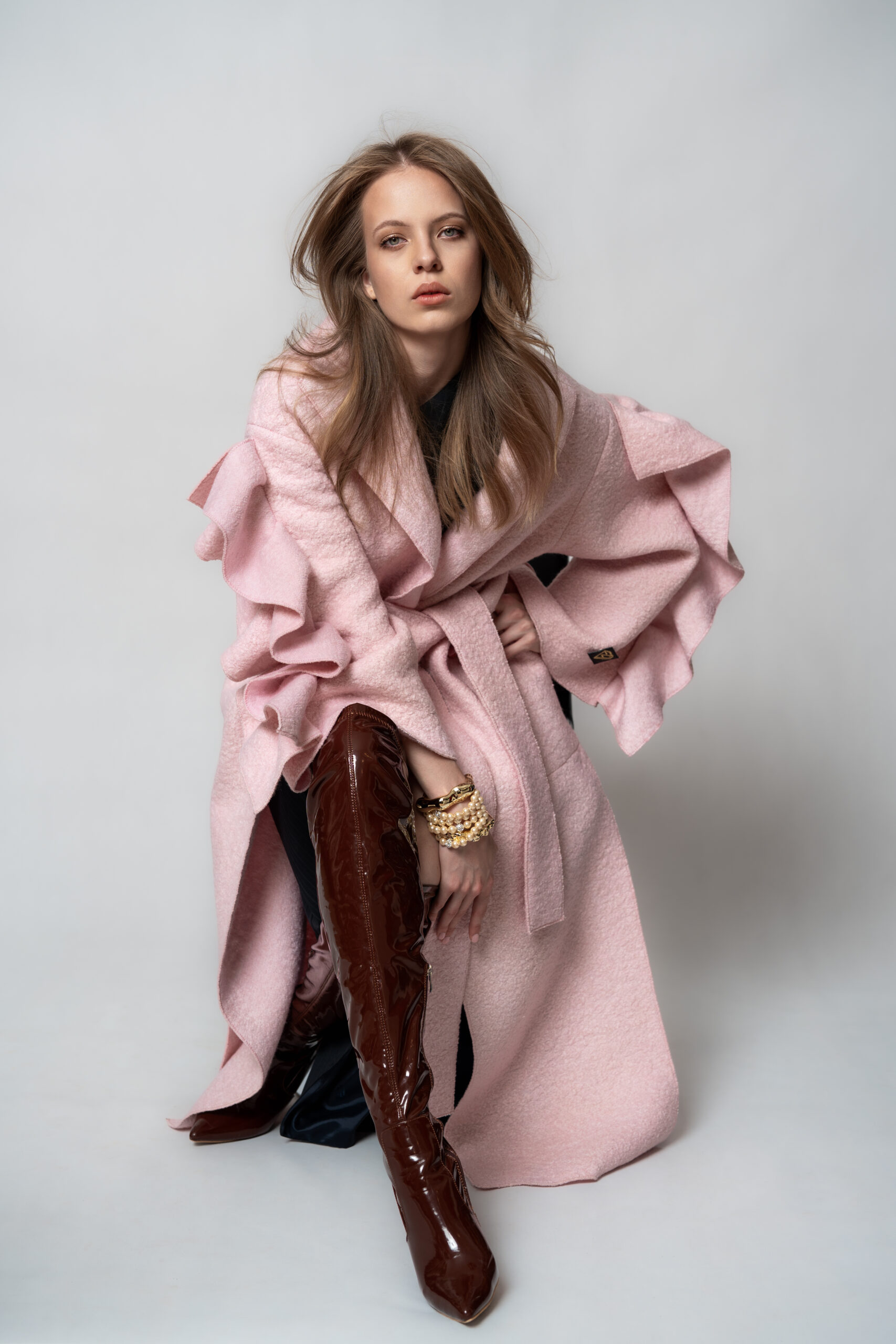
As I mentioned, few women decide on colour right away, they usually come in for a wardrobe in inconspicuous colours. First I’d name a lack of confidence, but we can work on that by trying on a piece and observing the enormous change in appearance. A fair number of women wear suits, treating them like a kind of protective armour against male superiors. Women want to feel professional, ideally without their competence judged through the lens of gender.
Do you see a difference between how professional women dress in Warsaw versus Stalowa Wola? Is that difference shrinking?
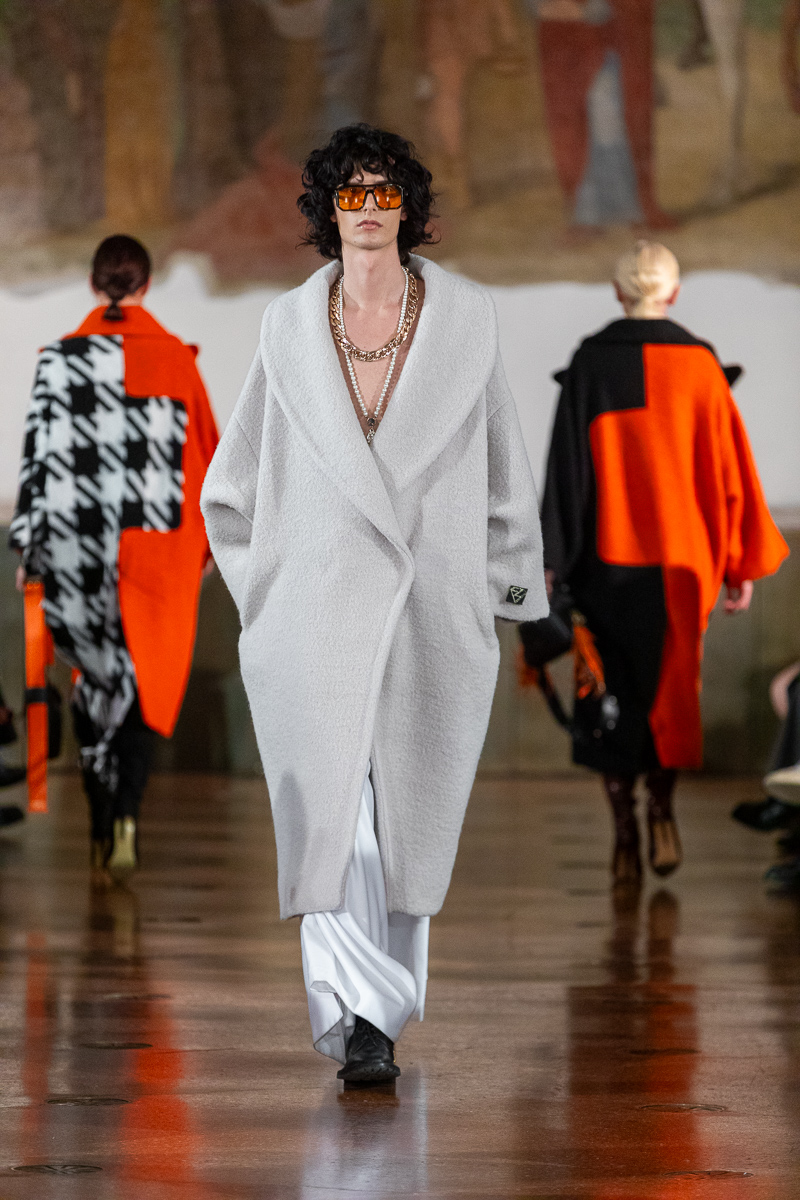
Bigger cities have a wider offer, much more choice, so women there certainly have greater access to interesting options. I do think, though, that in smaller towns the trend is visible too, and it’s moving in a good direction.
 You built something creative and independent in a small, Catholic, traditional town. Did you encounter resistance?
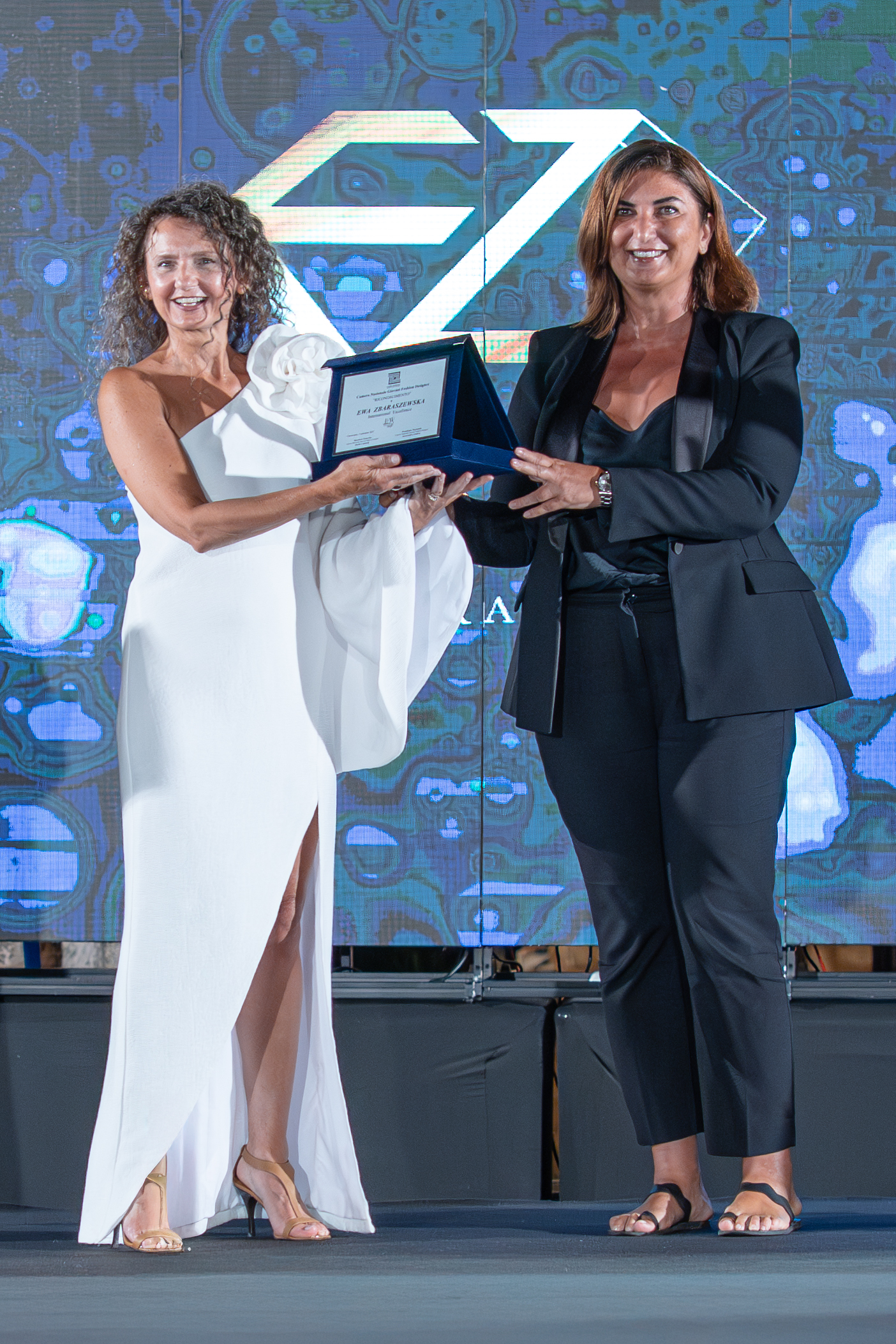
Art Moda is a friendly spot on the map of Stalowa Wola and the wider region. My friends and neighbours wave to me through the boutique windows as they pass by. It’s incredibly nice. And this year my boutique received the honour of “Boutique of the Year 2025.” Stalowa Wola is full of wonderful, beautiful, stylish, well-dressed women, so I meet them halfway with my innovative designs in pure, saturated colours.
Do you think Polish men have expectations about how their partners dress? Does this topic come up in conversations with your customers?
Sometimes customers come in with their partners or husbands. I invite the men to sit on the sofa, offer them coffee, and in a relaxed atmosphere they get to admire their wife or partner, often they also help with the purchasing decision. Women who come alone sometimes mention their partner’s preferences, meaning the partner doesn’t accept saturated colour or print. It makes me sad to hear from customers that they feel limited in expressing themselves.
Do you see a generational shift? Do younger women come in wanting something different from their mothers?
I notice concrete changes in relationships, then versus now. Women work, organise the whole family’s life, raise children, are educated and incredibly organised, and through that they gain a new awareness of themselves as valuable women. That expresses itself in how they dress and how they assert themselves.
You yourself refused an invisible wardrobe. Where does that come from in you, was it always like this, or did you have to fight for it?
For as long as I can remember, I’ve been drawn to beauty, harmony, colour, shape, and those are exactly the components of the phenomenon we call fashion. Even in primary school, when all my friends wore midi skirts, I was the first to start wearing mini. Being different has never scared me, it interests me. If I’m convinced of something, the reaction of those around me doesn’t matter to me.
We both grew up in smaller Polish towns. We both refused to dress the way our surroundings expected. What does this decision cost a woman here, and what does it give her?
Personal courage is probably the key role, being convinced of what we feel and how we see ourselves. I still live in the same city, which constantly inspires me with its history, its architectural styles, its greenery. I run a foundation there, ART & MODA in Stalowa Wola, which brings together lovers of Art Deco and modernist styles. Beauty can be seen everywhere, if we have it within ourselves.
Having worked for the past fifteen years in both the creative and business worlds, I know these two languages well enough to see exactly where they contradict each other. Ewa and I share one thing in particular: we both flatly refuse to follow the unwritten rules about how a woman is supposed to dress as she gets older. We’re both rebels in that sense, and if there’s a motto, it’s that we refuse to get old, meaning our state of mind, not the calendar.
Ewa talked about women wearing suits like armour, a way to feel professional without being judged through the lens of gender. I understand that instinct completely, but having spent fifteen years in big business, mostly surrounded by men, I know firsthand that the armour was never really the blazer. A straight posture, real confidence, and speaking clearly do more for how you’re perceived than any jacket ever will. Once you know that, the blazer can stop being a shield and start being a piece of clothing again, one you can actually have fun with.
For me, living in Spain finally feels like a breath of fresh air. In my styling workshops, I always teach women not to be afraid of colour, of interesting patterns, of texture, regardless of their age. What actually matters is choosing clothes that suit your body type, the occasion, and your skin tone, not your age. And yes, plenty of us have jobs that demand a formal dress code, but even the most formal outfit can hold a bit of creativity. Take the eternal navy blazer: swap in gold buttons, or play with an unusual button shape, and the whole look gets more playful without breaking any rules.
I always want women to remember that going to work isn’t a funeral. Even a serious job doesn’t mean being afraid of a bit of flair or colour. Adding age to how we dress doesn’t add wisdom, it mostly just adds how we think we’re supposed to be seen.